Dream of Losing Your Child in a Crowd Meaning Dream Meaning

By SomniaScope Research Team •
Key Takeaways
  • This dream usually reflects fear of losing control, not a literal prediction.
  • The child often symbolizes something precious, vulnerable, or dependent in your life.
  • Crowds point to overwhelm, distraction, pressure, or competing demands.
  • The panic in the dream matters as much as the plot itself.
  • Context matters: your parenting role, stress level, and current life changes shape the meaning.
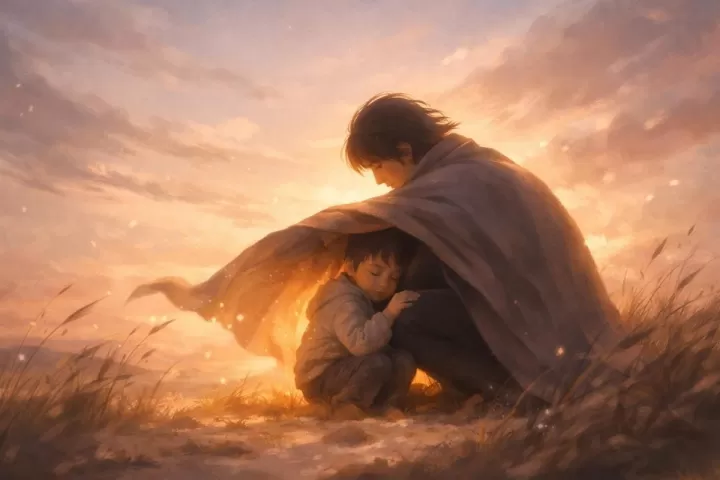
Symbolic illustration of a parent anxiously searching for a child in a crowded public place

Dreaming of losing your child in a crowd usually points to one central feeling: you are afraid that something precious could slip out of your care while life is noisy, demanding, or moving too fast. For many people, this dream is less about a literal child and more about responsibility, protection, guilt, divided attention, and the fear of not being able to hold onto what matters most when the world becomes overwhelming.

Quick Answer

This dream tends to land with unusual force because it combines love, panic, and helplessness in one scene. Its meaning usually lives in that combination: deep attachment meeting a moment where your attention, control, or confidence feels strained.

Core Meaning of losing your child in a crowd in Dreams

Fear of Losing Control

The most common interpretation is simple and powerful: some part of life feels harder to manage than usual. The dream turns that strain into the most emotionally charged image possible.

  • You feel responsible for too much at once
  • Daily demands are outpacing your sense of control
  • You worry that one missed moment could matter

Protective Instinct Under Pressure

If you are a parent or caregiver, the dream may reflect the mind rehearsing a worst-case fear. Not because it predicts danger, but because your protective system is highly active.

  • You are in a vigilant or watchful phase
  • Recent stress has sharpened your sense of risk
  • You feel emotionally responsible for others' safety

A Precious Part of Life Feels Neglected

The child can symbolize more than a person. It may stand for innocence, creativity, trust, hope, or a growing part of your life that needs attention and care.

  • A new project feels easy to lose track of
  • Your softer emotional life has been sidelined
  • You fear neglecting what matters while staying busy

Overwhelm in Social or Public Spaces

The crowd matters. Crowds in dreams often represent noise, pressure, competing voices, and the feeling that your own priorities are getting swallowed by outside demands.

  • You are stretched by work, family, or social obligations
  • Too many opinions are pulling at you
  • You feel disconnected in busy environments

Common Dream Scenarios

Details change the tone of the dream. The setting, your reaction, and whether you find the child all shape the message.

Losing Your Child at a Mall or Theme Park

This version often points to overstimulation. Bright places full of movement, choices, and noise mirror waking life periods where everything competes for your attention at once.

  • You feel mentally scattered
  • Pleasure and pressure are mixed together
  • You may be overcommitted even in "fun" settings

Turning Away for One Second

If the child disappears the moment you look away, the dream often centers on guilt and self-blame. It dramatizes the fear that one small lapse could have huge consequences.

  • You are hard on yourself about mistakes
  • You fear not doing enough
  • You may be replaying a recent moment of distraction

Calling Their Name but No One Helps

This scenario adds loneliness to the panic. It can reflect the feeling that others do not understand the weight you carry or that support is thinner than it should be.

  • You feel alone in your responsibilities
  • You are craving reassurance or backup
  • You may feel unseen in a demanding role

Finding the Child After a Frantic Search

This version usually softens the meaning. The dream still reflects fear, but it also suggests that reconnection is possible and that what feels lost may not be gone.

  • You are moving toward relief
  • A strained bond may be repairable
  • Your confidence may be returning

Emotional and Psychological Meaning

Few dreams expose vulnerability as quickly as this one. The emotional logic is immediate: there is someone small, precious, and dependent; there is a crowd that does not stop for your panic; and there is the terrible realization that your eyes were not on them for one second, or one minute, or long enough for fear to take over. Even people who wake knowing it was only a dream often carry the feeling for hours. That intensity is part of the meaning.

At a psychological level, dreams like this often gather several waking emotions into one scene. Responsibility is one of them. If you are carrying a lot right now, the dream may be translating that burden into a form your nervous system instantly understands. Instead of showing you a calendar, a work deadline, a difficult family dynamic, or a dozen unresolved tasks, the dream condenses everything into a single emergency: keep hold of what matters. When you cannot, panic arrives.

Another common layer is guilt, especially the ordinary guilt of modern life. Many people feel split between roles, screens, schedules, errands, and constant mental noise. In that state, attention can feel fragmented. A dream about losing your child in a crowd can reflect the fear that divided attention has a cost. It does not necessarily mean you have done anything wrong. It often means your mind is painfully aware of how much you care and how impossible it can feel to be fully present all the time.

The child in the dream may also represent dependency itself. Children need guidance, steadiness, and protection. So do new ideas, fragile relationships, creative plans, and parts of the self that are still growing. If you are trying to protect something tender while moving through a chaotic season, the dream may be showing you that mismatch. The crowd keeps moving. The vulnerable thing needs care. You are caught between speed and tenderness.

There is also a social dimension. Crowds in dreams often symbolize more than people. They can stand for public pressure, family expectations, workplace demands, social comparison, or the feeling that your own inner voice is being drowned out. In that sense, losing your child in a crowd may reflect a fear that what is most personal to you is getting swallowed by what is most public, loud, or urgent. The dream can feel like a protest against that condition. It says, in effect, this matters more than all of this noise.

Finally, this dream can reveal how deeply love and fear are linked. The stronger the attachment, the more vivid the fear of loss can become in sleep. That does not make the dream a warning. More often, it makes it an emotional truth-teller. It shows you where your heart is most exposed, where your protective instincts are strongest, and where life may currently feel too crowded for comfort.

Spiritual and Symbolic Meaning

On a symbolic level, this dream often speaks about losing contact with innocence, trust, or a sacred responsibility while moving through a world that feels noisy and impersonal. The child is usually the symbol of what is pure, emerging, or deeply entrusted to you.

The Child as Innocence

In many symbolic traditions, a child represents purity, openness, and the untouched core of the self. Losing the child can suggest distance from that softer center.

  • You feel hardened by stress or routine
  • Your gentler instincts have been crowded out
  • You miss a simpler emotional truth

The Crowd as Worldly Noise

Spiritually, the crowd can symbolize distraction, conformity, and the pull of outer life. It is the place where inner guidance becomes difficult to hear.

  • You are overexposed to outside demands
  • Your values may feel blurred by pressure
  • You need clearer emotional priorities

The Search as a Call to Reconnect

The act of searching matters. Symbolically, it suggests that even when something feels lost, your deeper self is still trying to restore contact with it.

  • You are not indifferent to what matters
  • Longing itself is part of the message
  • Reconnection may begin with attention

Finding or Not Finding the Child

If you find the child, the symbol leans toward recovery and return. If you do not, the dream may be emphasizing urgency, grief, or unfinished emotional business.

  • Resolution suggests hope and repair
  • An unresolved ending highlights inner tension
  • The final feeling often reveals the deeper theme

What This Dream May Say About Your Life Right Now

This dream often appears during periods when care, attention, and pressure are colliding. It tends to be less random than it feels, and more connected to the emotional weather of your current life.

You Are Carrying Too Much

When life becomes a constant act of juggling, the dream may reflect the fear that something important will be missed simply because there is too much to hold at once.

  • Work and home demands are stacking up
  • You feel mentally crowded all day
  • Your attention rarely gets to rest

You Feel Responsible for Someone Fragile

The dream may mirror a season where another person's wellbeing weighs heavily on you. That could be a child, a family member, or anyone who depends on your steadiness.

  • You are in protector mode
  • You worry about letting someone down
  • Your care comes with constant vigilance

You Are Afraid of Emotional Distance

Sometimes the dream is less about safety and more about connection. Losing the child can symbolize fear that closeness is slipping through busyness, conflict, or change.

  • You miss a bond that felt easier before
  • Schedules are replacing real presence
  • You are sensitive to signs of disconnection

A New Part of Life Feels Vulnerable

If you do not have children, or if the dream feels more symbolic than literal, it may point to a new beginning that still feels easy to lose: a plan, identity shift, hope, or creative direction.

  • You are protecting something not yet stable
  • Growth feels exciting but exposed
  • You fear chaos could derail it

How to Work with the Dream

Start with the emotional center, not the plot. Ask yourself what felt strongest: panic, guilt, helplessness, urgency, shame, relief, or anger at the crowd. Dreams like this often become clearer when you stop treating them as puzzles and start treating them as emotional maps. The image of the missing child is powerful, but the feeling around that image usually tells you what part of waking life the dream is touching.

It also helps to notice what the crowd was like. Was it careless, faceless, loud, festive, indifferent, impossible to move through? Those details often mirror the kind of pressure you are under. A cheerful crowd can suggest the strange burden of trying to stay responsible while everyone else seems relaxed. An aggressive or unhelpful crowd can reflect feeling unsupported. A blurred crowd can point to overload itself, where everything merges into one stressful mass.

If the dream repeats, pay attention to patterns rather than trying to force one fixed meaning. Repetition usually means the same emotional theme keeps getting activated. The dream may be returning to the same fear because the waking-life condition behind it has not fully eased, or because your mind is still trying to put language around a responsibility that feels bigger than words.

Journal the Exact Moment of Loss

Write down when the child disappeared in the dream. The turning point often reveals the meaning more clearly than the search that follows.

  • Note what distracted you
  • Record the setting and pace
  • Name the first emotion you felt

Spot Repeating Patterns

Look for recurring elements across similar dreams. Repetition can show whether the theme is guilt, overload, helplessness, or fear of separation.

  • Notice repeated locations
  • Track whether you find the child
  • Compare the dream to stressful periods

Reflect on What the Child Represents

Ask whether the child feels literal, symbolic, or both. In many dreams, the answer is layered rather than one or the other.

  • A real relationship may be in focus
  • A vulnerable project may fit the symbol
  • Your own softer self may be involved

Capture the Dream Quickly on Waking

Because these dreams are emotionally intense, details can fade fast once the day starts. A few quick notes can preserve the most useful clues.

  • Write before checking your phone
  • Save key images and phrases
  • Include the ending and your body feeling
Note

A dream about losing your child in a crowd is often disturbing precisely because it touches your deepest protective instincts. Its intensity does not make it literal. More often, it shows how much you care and how strained that caring may feel under pressure.

Summary

Dreaming of losing your child in a crowd is usually a dream about pressure meeting love. It reflects the fear that something deeply important could be lost, neglected, or pulled away while life is loud, fast, and demanding. Sometimes the child is your actual child and the dream expresses raw protectiveness. Sometimes the child symbolizes a bond, a hope, a responsibility, a new beginning, or a vulnerable part of yourself that needs steadier attention than your current circumstances seem to allow. The crowd almost always matters: it points to distraction, overload, social pressure, or the feeling that too many outside forces are competing with what you most want to protect. Taken as a whole, this dream is rarely a prediction. It is more often an honest emotional portrait of care under strain, and a reminder that what panics you in sleep is often what matters most to you in waking life.

Why This Dream Feels So Real

One reason this dream lingers is that it often unfolds with unusual sensory intensity. You may remember the sound of footsteps, the blur of faces, the sudden drop in your stomach, or the exact moment you realise the child is no longer beside you. Dreams that involve separation in public spaces often feel vivid because they tap into fast, primal emotions: attachment, alarm, urgency, and the need to act immediately. The mind does not present the fear as abstract. It stages it as a full-body experience.

That realism can point to how immediate the underlying stress feels in waking life. Even if the issue is not literally about a child, your inner world may be treating it as urgent, precious, and vulnerable. A project that matters deeply, a relationship that feels strained, a role you are trying to fulfil well, or a fragile sense of stability can all be experienced by the psyche as something that must not be lost. The dream gives that pressure a scene dramatic enough to match the feeling.

There is also something important about the public setting. Private fears become more exposed in a crowd. You are not alone in a quiet room where you can think clearly. You are in motion, under pressure, surrounded by people who may not notice your distress or may not stop to help. That detail often mirrors a waking sense that your inner alarm is happening in the middle of ordinary life, while everything around you keeps moving as if nothing is wrong.

For some dreamers, the realism comes from the contrast between responsibility and helplessness. You know exactly what you want to do: find, protect, reach, call, hold on. Yet the dream keeps placing obstacles between you and that goal. That tension can reflect a period where your intentions are strong but your circumstances feel messy, crowded, or beyond your control. In that sense, the dream is not only about fear. It is also about frustration.

Small Details That Change the Meaning

Two dreams can share the same basic plot and still mean slightly different things. The emotional message often becomes clearer when you look closely at the details around the loss rather than only the loss itself.

The Child's Age in the Dream

A very young child often points to something especially dependent, fragile, or new. An older child may suggest growing independence, changing roles, or anxiety about not being able to guide everything anymore.

  • A baby can symbolize total vulnerability
  • A toddler may reflect constant vigilance
  • An older child can point to separation and change

Your Distance From the Child

If the child is only a few steps away before disappearing, the dream may focus on how quickly security can feel shaken. If they are already far ahead, the theme may involve drift, transition, or difficulty keeping pace.

  • Nearness suggests sudden disruption
  • Distance can reflect gradual disconnection
  • The gap often mirrors emotional strain

Whether the Crowd Notices

An indifferent crowd can symbolize feeling unsupported. A helpful crowd may suggest that support exists but is hard to trust when you are overwhelmed. A hostile crowd can reflect pressure, judgment, or social fear.

  • Indifference points to isolation
  • Helpfulness can soften the dream's tone
  • Judgment may reflect shame or self-criticism

The Ending of the Dream

How the dream ends often reveals whether the deeper theme is panic, grief, repair, or unresolved tension. A sudden waking can leave the emotional question open, which is often meaningful in itself.

  • Relief suggests reconnection is possible
  • No ending can reflect ongoing stress
  • A bleak ending may highlight exhaustion

If You Are a Parent, Caregiver, or Guardian

For parents and caregivers, this dream can feel almost too direct to interpret symbolically. Sometimes it is direct in the simplest sense: your protective instincts are active, and sleep is giving them a dramatic form. If you are carrying the invisible labour of watching, planning, anticipating, remembering, and staying alert for others, the dream may simply reflect how much responsibility lives in your nervous system.

That does not make the dream shallow

Note

This guide is for general information and reflection only. It is not medical advice or a substitute for professional assessment.

Frequently Asked Questions

What does it mean to dream about losing your child in a crowd?

Most often, it reflects anxiety, responsibility, and the fear of failing to protect something important. The child may be your actual child, but in many dreams it also represents a vulnerable part of your life that feels hard to keep track of.

Is dreaming of losing your child a bad omen?

No. Dreams like this are usually symbolic rather than predictive. They often mirror stress, mental overload, or a strong protective instinct rather than foretell an event.

What if I do not have children but dream of losing one?

In that case, the child often symbolizes innocence, a new project, your future, or a tender emotional part of yourself. Losing the child can suggest fear of neglecting or failing something that matters deeply.

Why is the crowd important in this dream?

A crowd usually symbolizes noise, pressure, distraction, social demands, or feeling outnumbered by life. It suggests that too many competing forces may be making it hard to stay connected to what matters most.

What does it mean if I find the child at the end of the dream?

Finding the child often points to relief, reconnection, or the sense that what feels lost can still be recovered. It may reflect growing confidence that you can regain focus or restore emotional closeness.

Why do these dreams feel so intense?

Dreams involving children often trigger strong protective emotions. The combination of urgency, guilt, and helplessness can make the dream feel unusually vivid, even when its meaning is symbolic.