THE DREAM JOURNAL
Screaming but No Sound Dream Meaning: Blocked Expression, Fear, and REM Paralysis Themes
A reflective guide to possible meanings. Your own experiences and feelings matter more than any dream dictionary.

- Dreams of screaming with no sound often point to blocked expression, helplessness, overwhelm, or the feeling that your alarm is not reaching anyone.
- For some people, this dream also overlaps with REM-sleep or sleep-paralysis themes, where awareness and temporary inability to move or speak can feel frightening.
- The dream becomes more specific when you notice who or what you were trying to warn, escape, confront, or express yourself to.
- The most useful interpretation links the silent scream to current pressure, swallowed emotion, fear, trauma cues, or exhaustion rather than treating it as a fixed prophecy.
Few dream experiences feel as intense as trying to scream and discovering that no sound comes out. The image is simple, but the emotion is powerful: urgency without impact, fear without release, and a body that seems unable to do what the mind wants. That is why this dream often lingers after waking. It can capture blocked expression, panic, helplessness, or the sense that something important inside you is not being heard.
Dreaming of screaming but making no sound usually suggests some form of blocked expression or powerlessness. You may feel unable to speak clearly, defend yourself, ask for help, release fear, or communicate the seriousness of what you are carrying.
In some cases, especially if the dream seems to blend with waking, the experience can also resemble sleep paralysis, a state linked with REM sleep in which a person may feel conscious but temporarily unable to move or speak. Either way, the dream often points toward stress, fear, overload, or unexpressed emotion.
Core Meaning of a Silent-Scream Dream
At its heart, this dream is about the gap between inner urgency and outer effect. You know something matters. You want to warn, protest, cry out, or survive. Yet the dream strips away your voice. That gap is what makes the symbol so potent. It often appears when your waking life contains pressure you cannot fully release, words you do not feel safe saying, or fear that arrives faster than your sense of control.
The silent scream can symbolize many kinds of blockage: emotional repression, social inhibition, fear of consequences, trauma-linked shutdown, intense stress, or the feeling that no one would understand even if you spoke. It can also reflect the experience of being psychologically flooded, where the body and mind move into survival mode and clear expression becomes harder.
Because dreams are deeply emotional rather than strictly logical, the setting matters. If you are screaming at a threat, the dream may emphasize fear and defense. If you are screaming to warn someone, it may emphasize responsibility, frustration, or the burden of not being heard. If you are screaming in grief, the dream may point toward emotion that has not found enough space in waking life.
Dreams that involve threat, panic, or bodily limitation tend to be memorable because they engage strong emotional systems. That does not make them literal predictions. It makes them emotionally vivid.
What the Dream Can Reveal About Blocked Expression
One of the clearest readings of this dream is blocked expression. You may be holding back anger, fear, sadness, truth, or even a basic need. Sometimes the block is external: a relationship where you do not feel heard, a workplace where you must stay guarded, or a situation where speaking seems risky. Sometimes the block is internal: shame, doubt, self-censorship, or the habit of dismissing your own feelings until they become louder in dreams.
The dream does not always mean you literally need to have a confrontation. Sometimes it points more subtly to emotional bottling. If you spend most of the day functioning, coping, and staying composed, your dream life may become the place where your unsaid alarm finally shows itself.
That is also why this dream can appear during burnout, relationship tension, grief, or periods when you feel trapped between what you truly feel and what you think you are allowed to express.
Feeling Unheard
The dream may mirror situations where your concerns do not seem to land.
- You repeat yourself without relief.
- You fear your needs will be minimized.
- You doubt whether your voice matters.
Fear of Consequences
Sometimes the missing voice reflects caution or self-protection.
- You worry about conflict.
- You fear rejection or punishment.
- You have learned to stay quiet to stay safe.
Emotional Overload
Intense stress can make clear expression harder in waking life and in dreams.
- Your system feels flooded.
- Words come too late.
- Your body reacts before your mind catches up.
Suppressed Grief or Anger
A silent scream can be the shape unprocessed emotion takes at night.
- You are carrying more than you admit.
- Release feels overdue.
- The dream acts like pressure seeking an outlet.
Common Silent-Scream Dream Scenarios
The specific form of the dream can sharpen the interpretation. Here are some of the most common versions and what they often point toward emotionally.
As always, use these as prompts, not rigid rules. The feeling of the scene matters as much as the image itself.
Trying to Warn Someone
This often points to responsibility, urgency, or frustration that others are not seeing a problem.
- You may feel protective.
- You may fear being too late.
- You may feel alone in carrying concern.
Screaming at a Threat
A threat-focused dream often centers on fear, defense, and survival response.
- You feel cornered.
- You need boundaries.
- You want to fight back but feel stuck.
No Voice in Front of a Crowd
This version often connects to shame, judgment, public pressure, or fear of exposure.
- You fear embarrassment.
- You feel misunderstood.
- You are worried about how others see you.
Screaming While Frozen in Bed
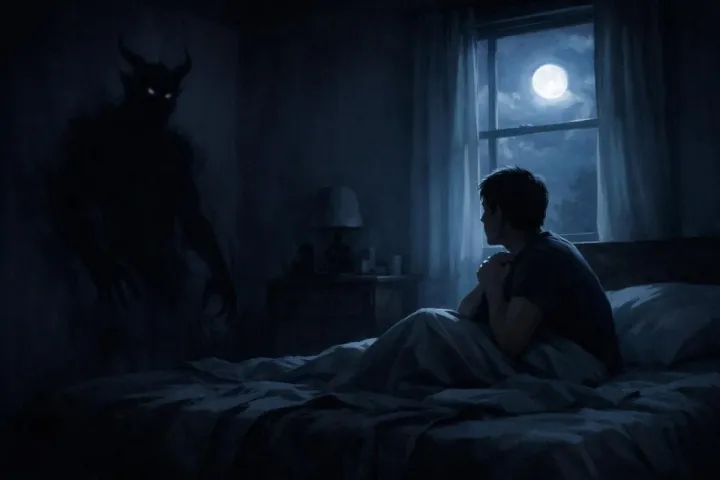
When the dream blends with waking and your body feels stuck, sleep-paralysis themes become more relevant.
- The experience can feel hyper-real.
- You may be aware but unable to move or speak.
- It often passes, but it can be frightening.
When the Dream Overlaps With Sleep Paralysis Themes
Some people describe the silent-scream dream as if it happened half inside the bedroom and half inside the dream. That detail matters. Sleep experts describe sleep paralysis as a temporary inability to move or speak while falling asleep or waking up. It is often linked with REM sleep, the stage associated with vivid dreaming. During REM sleep, the body normally goes into a state of muscle atonia, which helps prevent acting out dreams. If awareness returns before that state fully clears, the experience can feel intensely real and frightening.
Not every silent-scream dream is sleep paralysis, and you do not need to diagnose yourself from a dream article. But if the experience includes waking awareness, chest pressure, an inability to move, or a sense of being trapped between sleep and wakefulness, that overlap is worth considering. The emotional after-effect can be similar in either case: terror, helplessness, and the memory of trying to call out but failing.
Whether the dream is symbolic, physiological, or both, the waking message is still often about stress load, sleep quality, and the need to feel safer and more regulated. Recurrent episodes, especially if disruptive, are worth discussing with a qualified professional.
This guide can help you reflect, but it cannot diagnose sleep paralysis, trauma, or a sleep disorder. If episodes are frequent, severe, or frightening enough to disrupt sleep, seek professional advice.
What This Dream May Say About Your Life Right Now
In daily life, this dream often appears when your system feels overworked, unheard, or under threat. You may be managing conflict carefully, living with chronic stress, holding a difficult truth inside, or feeling that you must stay composed while something in you wants release. The dream turns that pressure into a stark image: a scream that never becomes sound.
It can also show up in transitions where your identity, boundaries, or needs are changing. Perhaps you are discovering that silence costs too much. Perhaps you are tired of minimizing what hurts. Or perhaps you are simply exhausted, and your dream is dramatizing a nervous system that needs more recovery and less suppression.
This does not mean the dream is negative in every case. Sometimes it is the beginning of clarity. The fact that the dream shows the blockage so clearly can be the first step toward changing how you speak, rest, protect yourself, or ask for help when awake.
Where do you currently feel unable to speak freely? What emotion was strongest in the dream: fear, anger, grief, frustration, urgency? What situation in waking life feels similar to “trying to be heard but nothing comes out”?
How to Work With This Dream
Begin by writing down exactly what happened: who you were trying to reach, whether there was a threat, and whether the dream felt fully asleep or half-awake. That distinction can help you decide whether the dream reads more like emotional symbolism or like an episode with sleep-paralysis qualities.
Then look at your waking communication patterns. Are you swallowing too much? Are you over-explaining in places where you do not feel safe? Are you avoiding a necessary conversation? The dream may not be demanding dramatic action, but it often points toward the need for a more honest channel of expression.
Also check your sleep basics. Stress, irregular schedules, sleep loss, and emotional overload can all intensify vivid dreams and parasomnia-like experiences. Calmer routines, better sleep protection, and direct emotional processing often reduce the dream’s intensity over time.
Record the Exact Scene
Capture the details before they blur.
- Who were you trying to reach?
- Did the dream feel symbolic or half-awake?
- What happened right before the scream?
Name the Unsayable
Translate the dream into waking language.
- What have you not said?
- What do you fear would happen if you said it?
- Who do you most want to hear you?
Reduce Sleep Pressure
Support the nervous system at the same time.
- Protect sleep hours.
- Reduce stimulants late at night.
- Create a calmer wind-down routine.
Get Support if Needed
Recurrent distress deserves care, not shame.
- Talk with a trusted person.
- Consider therapy if the dream links to trauma or shutdown.
- Seek medical help for frequent paralysis-like episodes.
Dream reflection is useful, but it is not a substitute for mental health care or sleep medicine. If your sleep is repeatedly disrupted, that matters.