THE DREAM JOURNAL
Dreaming of a Citywide Power Cut
A reflective guide to possible meanings. Your own experiences and feelings matter more than any dream dictionary.
KEY TAKEAWAYS
- Focus on how you reacted when everything went dark
- Notice whether the blackout felt threatening, quiet, or freeing
- Look at who was with you and what stopped working
- Use the dream to reflect on control, dependence, and adaptation
A dream about a citywide power cut often stands out because it changes everything at once. Streets, homes, transport, phones, and familiar routines can all become uncertain in a single moment. That scale can make the dream feel bigger than a simple inconvenience. Rather than assuming one fixed meaning, it helps to ask what the darkness interrupted, how you felt, and what you tried to do next. For one person, this dream may reflect overwhelm and helplessness; for another, it may reveal a wish to unplug, slow down, or see what remains when the usual noise disappears.
QUICK ANSWER
A citywide power cut in a dream often reflects a sudden loss of clarity, control, energy, or reliable structure in waking life. The most useful clues are your emotions and behavior inside the dream. Panic can point toward stress or fear of instability, while calm may suggest readiness to adapt or even a desire for relief from constant demands. Pay attention to what stopped working, who you were with, and whether the darkness felt isolating or strangely peaceful. Those details usually say more than the blackout itself.
Why this dream can feel bigger than the event
A citywide power cut affects more than one room or one device, so in dreams it can represent a disruption that feels widespread in your life. You may be dealing with a change that touches work, relationships, plans, identity, or your sense of safety all at once. The dream image is powerful because it removes the background systems you usually depend on without thinking. When those supports vanish, your deeper concerns about stability, independence, and preparedness can come into focus quickly.
This does not mean the dream predicts disaster. More often, it mirrors the inner experience of being suddenly unable to rely on familiar routines. If you recently felt thrown off by conflict, burnout, uncertainty, or major decisions, the blackout may capture that shift in one dramatic image. On the other hand, if waking life has felt overstimulating, the dream may also express a hidden wish for everything to pause. Darkness in that case is not only loss; it can also be a break from pressure, noise, and constant demands.
- A total shutdown can reflect feeling stretched across many areas of life
- A sudden outage can mirror abrupt change rather than literal danger
- The dream may express either fear of collapse or relief at a forced pause
Your emotions are the strongest clue
Start with the emotional tone. If the blackout brought fear, confusion, or urgency, ask where you currently feel underprepared or cut off from reassurance. Maybe you are waiting for answers, losing momentum, or facing a situation where your usual strengths are not working. Panic in the dream can reflect the stress of not being able to fix things quickly. Shame or embarrassment can suggest worries about being seen without your usual competence, resources, or polished image.
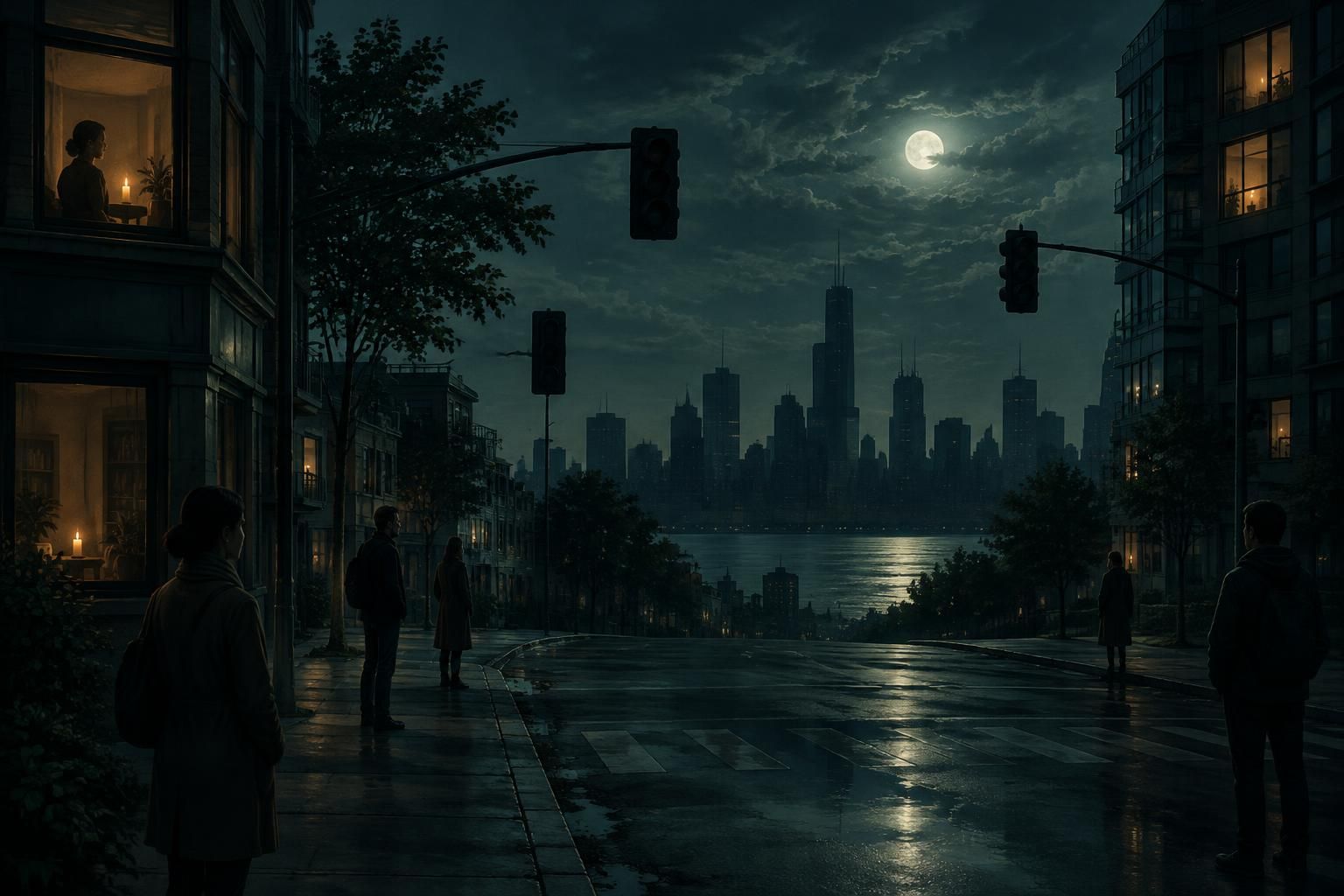
If the dream felt quiet, intimate, or oddly beautiful, the meaning shifts. Some people dream of darkened streets, candlelit windows, and a slower pace with a sense of relief. That can reflect a longing to step outside constant connectivity, performance, or information overload. Even boredom in the dream can be revealing, especially if you struggle to be still in waking life. The same blackout may mean threat for one person and permission for another, so your felt experience matters more than any standard symbol list.
- Panic may reflect stress, vulnerability, or fear of losing control
- Calm may point to adaptability or a wish to unplug
- Awe, loneliness, irritation, or relief each change the reading
Notice what stopped working
In many dreams, the most revealing detail is not the darkness itself but the specific systems that fail. If your phone dies, the dream may connect to communication, social connection, or dependence on constant updates. If transport stops, you may feel blocked from progress or unable to move life forward. If lifts, doors, traffic lights, or payment systems fail, ask where structure, access, or trust in smooth functioning feels shaky right now. Each broken system narrows the reflection from general disruption to a more personal theme.
The setting also matters. A blackout in your home may center on private life, family roles, rest, or your inner world. One in a workplace may reflect pressure around performance, deadlines, or visibility. A blackout while you are in a hospital, school, station, or shopping center creates a different emotional frame. Contrast helps here: being safely indoors with candles is not the same as being stranded in a crowded street. Write down exactly where you were, what you needed, and what became impossible.
- Home blackout: private life, comfort, family, inner security
- Work blackout: pressure, competence, visibility, productivity
- Transit or street blackout: direction, momentum, public uncertainty
Who was with you, and how did people respond?
A citywide power cut often turns attention toward other people. In the dream, did everyone panic, cooperate, ignore each other, or become unexpectedly kind? Group behavior can mirror your beliefs about support and trust. If no one helps and you feel alone, the dream may reflect isolation or the sense that you must manage everything yourself. If strangers gather calmly and share light, food, or directions, the dream may point to resilience, interdependence, or a reminder that support can appear in simple forms.
Pay close attention to known people in the dream. A partner who disappears when the lights go out may symbolize feeling unsupported under stress, though it does not prove anything about their real intentions. A parent taking charge might reflect comfort, pressure, or an old pattern of dependence. A child in the dream may highlight responsibility and protectiveness. If the dream centers on finding someone, losing contact, or trying to reach family, it can reflect current anxieties about connection, care, and what matters most when normal structures fail.
- Strangers may reflect your expectations of society and community
- Family members can point to support, dependence, or responsibility
- Being alone may emphasize self-reliance or isolation
A gentle way to reflect after the dream
Try a short journaling exercise with two columns: In the first, list what went dark or stopped working in the dream. In the second, write what each item reminds you of in waking life right now. Keep it personal and concrete. For example, a dead phone might connect to waiting for an important reply, while traffic chaos might resemble competing demands and poor timing. Then add one line about your emotional state at each stage of the dream, from the first outage to whatever happened next.
End by asking, What helped me cope in the dream, even a little? Maybe you looked for candles, stayed close to someone, followed a voice, or simply waited. Those responses can reveal strengths you overlook when stressed. If the dream leaves lingering distress, grounding can help: turn on a lamp, name five visible objects, and take a few slow breaths while reminding yourself that the dream is over. If blackouts or disaster dreams are frequent, intense, or tied to broader anxiety, talking with a mental health professional may be supportive.
- List what failed, then connect each detail to current life themes
- Track emotional shifts from first outage to the dream's ending
- Note coping actions to identify real strengths and supports
QUESTIONS TO REFLECT ON
- What in my life currently feels suddenly less reliable or predictable?
- Did the blackout feel frightening, peaceful, frustrating, or freeing, and where do I feel that emotion in waking life?
- What specifically stopped working in the dream, and what personal association does that detail bring up for me?
- Who was present during the blackout, and what did their behavior suggest about support, trust, or pressure?
Final meaning
A dream about a citywide power cut often speaks to your relationship with uncertainty. It can reflect stress when usual systems, habits, or assumptions no longer feel dependable, but it can also reveal a quieter truth: part of you may want a pause from constant input and responsibility. The most meaningful interpretation comes from the dream's texture, not the headline image alone. Notice whether you felt abandoned or connected, trapped or resourceful, scared or relieved. Seen that way, the blackout is less a message about catastrophe and more a picture of how you meet disruption, what supports you miss, and what inner steadiness may still remain when external power drops away.
Frequently asked questions
Is dreaming of a citywide power cut always a bad sign?
No. It often reflects disruption, uncertainty, or stress, but it can also symbolize relief, rest, or a desire to disconnect from pressure. A lot depends on the emotional tone. If the darkness felt peaceful or grounding, the dream may be highlighting your need for simplicity or space rather than warning of anything negative.
What if I was calm during the blackout dream?
Calmness can suggest adaptability, trust in your ability to cope, or a wish to slow down. It may also show that some part of you is less afraid of change than you are during the day. Consider whether the dream gave you a rare sense of quiet, privacy, or freedom from constant demands and noise.
Does this dream mean I feel out of control?
Sometimes, but not always. A citywide outage can mirror moments when usual systems stop working, so it may reflect feeling unsupported, blocked, or uncertain. Still, the dream might be more about reevaluating dependence on routine or technology. Your actions in the dream matter: searching, helping, waiting, or adapting all point to different meanings.
Why do disaster-like dreams feel so vivid?
Dreams that affect many people or large settings can feel especially intense because they compress several emotions into one image. A citywide power cut touches safety, communication, movement, and social order at once. That makes the dream memorable even when the waking-life issue is less dramatic, such as burnout, transition, conflict, or feeling mentally overloaded.