THE DREAM JOURNAL
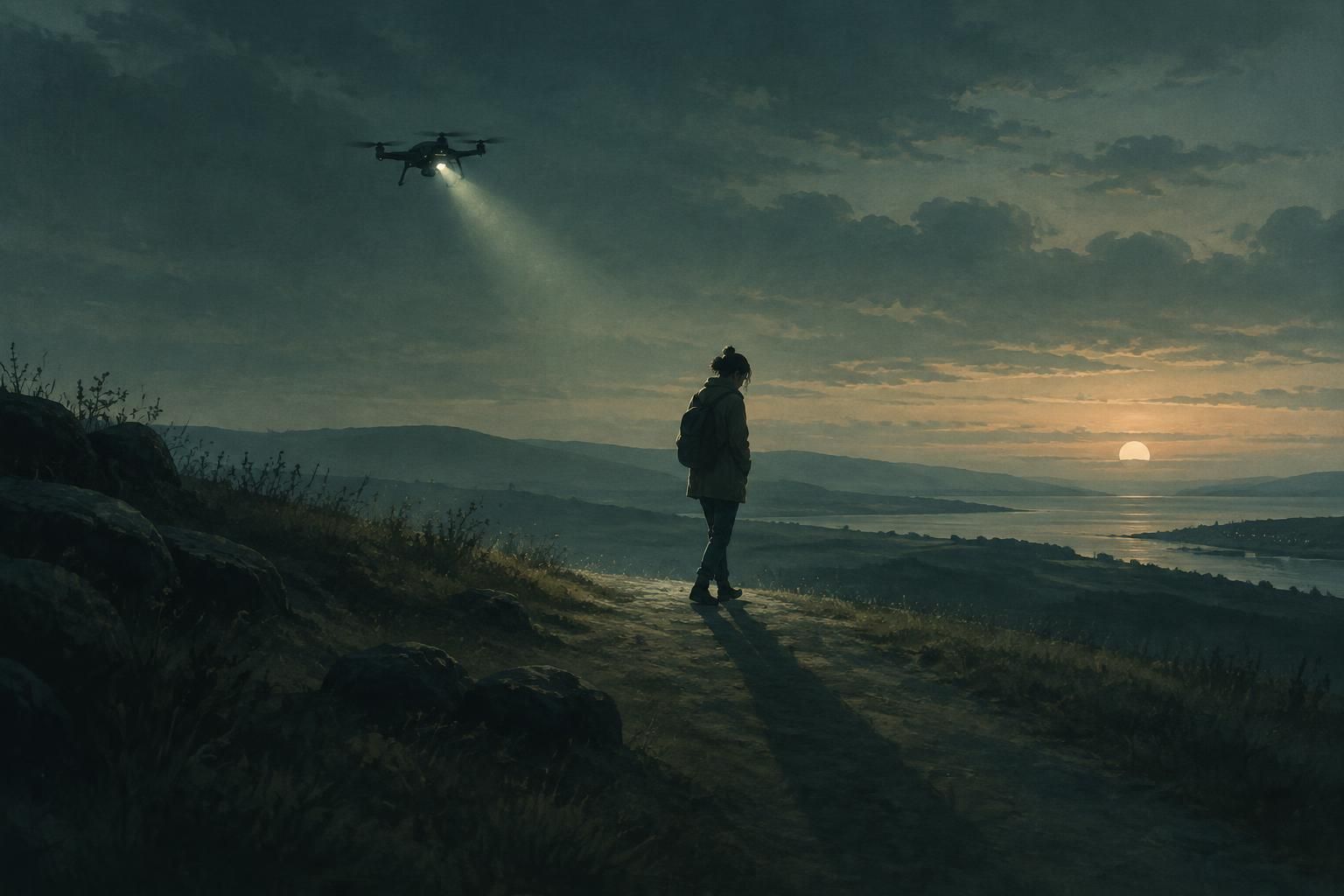
Dreaming of a Drone Following You
A reflective guide to possible meanings. Your own experiences and feelings matter more than any dream dictionary.
KEY TAKEAWAYS
- The feeling in the dream matters as much as the drone itself
- Being followed often points to pressure, vigilance, or self-monitoring
- Your personal associations with drones shape the meaning
- Small dream details can reveal whether the theme is threat or guidance
A dream about a drone following you can feel uneasy because it combines distance, movement, and watchfulness. Unlike a person following you, a drone suggests observation without closeness, as if something is tracking you while staying out of reach. That image can connect to privacy concerns, performance pressure, social visibility, or your own inner critic. In some dreams the drone feels invasive; in others it seems helpful or simply present. The most useful interpretation starts with your emotions, the setting, and what in waking life currently makes you feel monitored, exposed, or directed.
QUICK ANSWER
A drone following you in a dream often reflects feeling watched, evaluated, or unable to fully relax. It may relate to work pressure, social exposure, privacy worries, or a habit of constantly checking yourself from a distance. Context changes the meaning: a loud drone chasing you can mirror scrutiny or stress, while a calm drone overhead may reflect planning, awareness, or perspective. Ask yourself what currently feels intrusive, demanding, or mentally hard to escape.
Why a drone stands out in dreams
A drone carries a different feeling than a bird or airplane. It often suggests remote control, surveillance, recording, mapping, or attention without relationship. Because it is directed rather than natural, it can make a dream feel deliberate, as if something has fixed its focus on you. If the drone follows you, the dream may be highlighting a sense that your movement, choices, or progress are being noticed in a way that feels hard to escape or fully understand.
This image also fits modern stress especially well. You may feel visible online, measured at work, compared within your family, or unable to stop reviewing your own behavior. Sometimes the pressure seems external, and sometimes it comes from within. Ask whether the drone felt hostile, curious, protective, or emotionally blank. That distinction helps separate dreams about intrusion from dreams about perspective, planning, or a part of you trying to stay alert.
- Remote control can suggest reduced autonomy
- Camera-like watching can reflect scrutiny or self-consciousness
- Hovering often points to something persistent and hard to ignore
Let the emotion and setting guide the meaning
Your emotional reaction is one of the best clues. Panic may reflect overwhelm, exposure, or pressure that feels inescapable. Annoyance can point to repeated boundary crossings or constant low-level stress. Curiosity may suggest growing awareness or trying to understand a situation from a wider angle. If you felt calm, the drone might represent an observing part of you that is organized, watchful, or trying to help you stay oriented rather than control you.
The setting adds important detail. A drone following you through your home can connect to privacy, rest, or emotional safety. At school or work, it may mirror evaluation, standards, or comparison. On a road or path, it can reflect concern about where your life is heading and who seems to be judging that direction. In a crowd, it may point to social visibility and discomfort about standing out. Notice whether you hid, confronted the drone, ignored it, or tried to communicate with it. That response often resembles your real coping style.
- Fear may point to intrusion or pressure
- Annoyance may point to repeated boundary crossings
- Calm may suggest perspective or organized self-monitoring
What waking life might this reflect?
One common meaning is practical scrutiny. The dream may appear during job reviews, deadlines, family tension, public posting, or any period when your choices feel highly visible. Even without literal surveillance, you may feel emotionally observed. The drone fits that experience because it stays near enough to monitor but far enough to feel detached. If the dream came after a stressful week, ask where you have been trying to stay ahead of criticism, embarrassment, or constant demands for attention.
Another possibility is that the drone represents your own observing mind. You may be checking yourself too closely, correcting every move, or struggling to relax unless everything is optimized. In that sense, the dream can point to self-surveillance, perfectionism, or mental overmanagement. Still, not every version is negative. If the drone lit your path, helped you navigate, or felt steady rather than menacing, it may reflect a useful wish to step back, get perspective, and see your situation more clearly before acting.
- Work or school evaluation
- Online visibility or social comparison
- Family scrutiny or criticism
- Inner critic, planning, or perfectionism
A grounded way to reflect on the dream
Try a brief journaling exercise. First, list the plain facts of the dream without interpreting them: where the drone appeared, how close it stayed, whether it made noise, whether it filmed you, and what you did next. Then write your personal associations beside each detail. A loud buzzing might remind you of mental overload. A camera lens might connect to feeling judged. A high altitude might suggest emotional distance, while low hovering might feel like pressure that is too close for comfort.
Next, finish the sentence, “Right now I feel followed by...” and answer honestly. It could be a deadline, guilt, expectations, grief, conflict, or your own need to get everything right. If more than one answer fits, note which one creates the strongest emotional response. Helpful follow-up questions include: Where do I need more privacy? What am I trying to prove? What would make me feel less watched and more in control? The goal is not to force a fixed symbol, but to identify what has been hovering in your mind.
- List dream facts before interpreting them
- Match details to personal waking-life associations
- Use the prompt: “Right now I feel followed by...”
Think boundaries before big conclusions
It is easy to turn a dream like this into a dramatic message, but a grounded reading is usually more useful. Dreams often exaggerate emotional truth rather than predict literal events. A drone following you may simply picture what it feels like to have too little breathing room. Instead of asking who is doing this to you, ask where you need more space, privacy, choice, or rest. That shift often turns the dream from something alarming into something practical.
This dream frequently points toward your relationship with attention and control. You may need firmer boundaries with work, less overexposure online, more distance from criticism, or a kinder inner voice. If the drone felt helpful, the dream may be showing that perspective is available when you step back from panic. If it felt threatening, the dream may be naming stress you have minimized. In either case, the message is often less about danger and more about reclaiming agency over what gets close to you mentally and emotionally.
- Focus on emotional truth rather than literal prediction
- Boundary questions are often more useful than blame
- The dream may invite more privacy, rest, or agency
QUESTIONS TO REFLECT ON
- What in my life currently makes me feel watched, evaluated, or unable to relax?
- Did the drone feel threatening, annoying, helpful, or neutral, and where do I feel that same tone while awake?
- What did I do in the dream when I noticed the drone, and how does that resemble my real coping style?
- If the drone represented part of me, what part would it be trying to monitor or protect?
Final meaning
A dream about a drone following you often centers on attention, control, and emotional distance. It may reflect outside scrutiny, social visibility, work pressure, family expectations, or your own habit of closely monitoring yourself. The strongest clue is the tone of the dream: fear may suggest intrusion, irritation may suggest crossed boundaries, and calm may suggest perspective or preparation. Rather than treating the dream as a prediction, view it as a picture of what has been hovering around your mind. Its practical message is often to notice what feels invasive or exhausting and consider where stronger boundaries, more privacy, or a gentler inner voice would help you move more freely.
Frequently asked questions
Is dreaming of a drone following me always a bad sign?
No. The image is often unsettling, but not automatically negative. A harsh or relentless drone may reflect pressure, scrutiny, or invasion of space. A steady drone that quietly keeps pace or helps you see the path may suggest perspective, planning, or a watchful part of you. The emotional tone matters more than the object alone.
What if I never use drones or care about them in real life?
You do not need a strong personal interest in drones for the image to work in a dream. They are easy symbols for being watched, tracked, managed, or guided from a distance. Start with those broad themes, then narrow the meaning by looking at your feelings, the setting, and what currently feels persistent or hard to shake.
Does this dream mean someone is actually spying on me?
Usually not. Dreams often turn emotional pressure into vivid images without pointing to literal events. This dream is more likely about the feeling of being watched than proof of actual surveillance. If you have real-world privacy concerns, handle them practically. Otherwise, the dream usually reflects stress, exposure, self-consciousness, or a need for stronger boundaries.
Why do I keep having this dream again and again?
Recurring dreams often return when a feeling or conflict remains unresolved. A repeating drone dream may point to ongoing pressure, privacy concerns, hypervigilance, social visibility, or harsh self-monitoring. Compare each version closely. If the drone gets louder, closer, or easier to face, those shifts may reflect how your waking-life stress is changing and whether you are gaining more confidence with it.