THE DREAM JOURNAL
Dreaming of a Solar Eclipse by Day
A reflective guide to possible meanings. Your own experiences and feelings matter more than any dream dictionary.
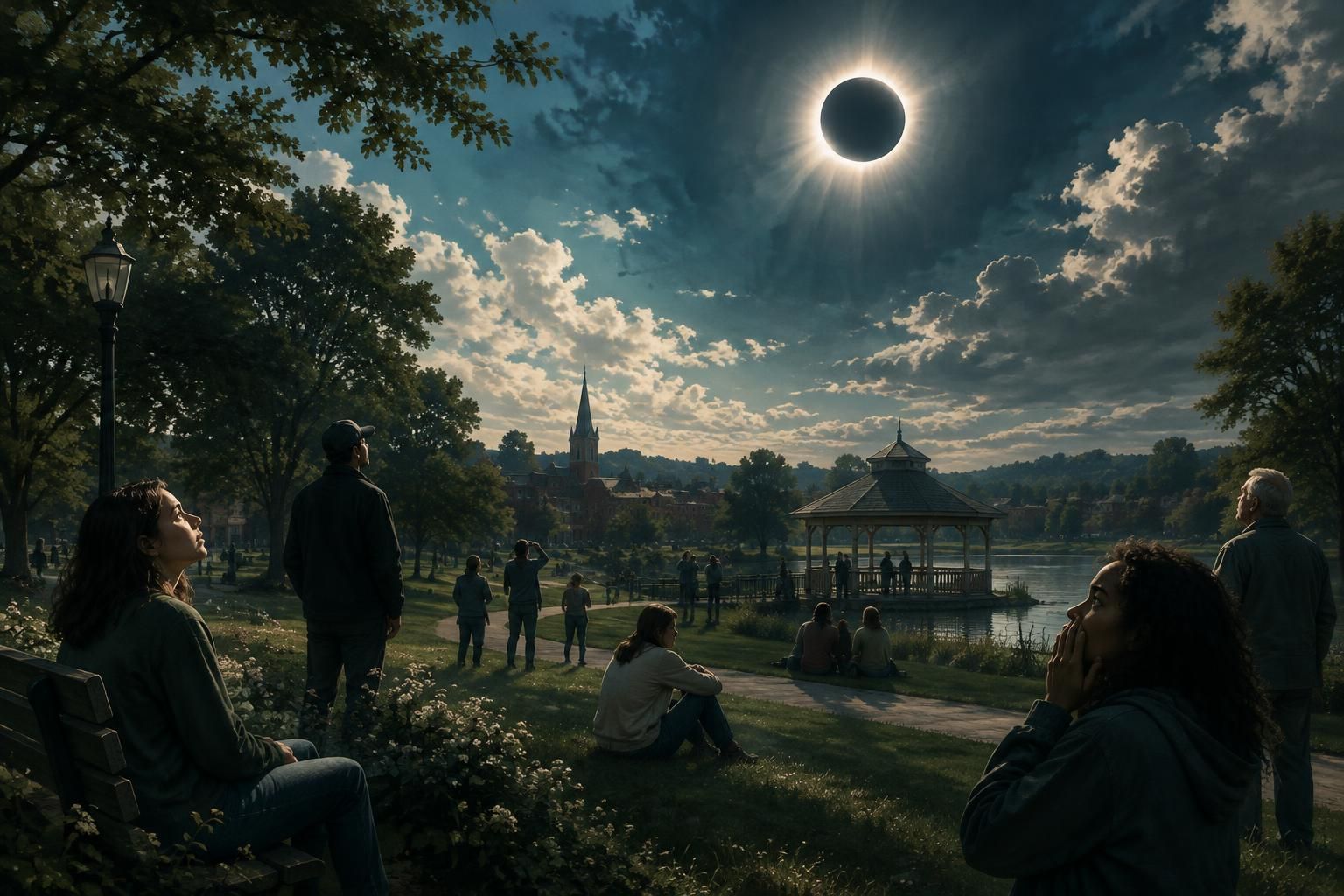
KEY TAKEAWAYS
- A daytime eclipse often points to interrupted clarity or a major shift
- Your feelings in the dream change the meaning more than the image alone
- Who you were with and what stopped during the eclipse matters
- Use the dream to explore uncertainty, timing, and hidden priorities
A dream about a solar eclipse in the daytime can feel intense because it disrupts something that usually seems dependable: daylight itself. That contrast often carries emotional weight, mixing visibility with shadow, order with surprise, and wonder with unease. Rather than forcing one fixed meaning, it helps to ask what felt interrupted, dimmed, or suddenly important. Often, this dream reflects temporary uncertainty, a transition, or a truth you can no longer ignore. The setting, your mood, and your personal associations are the best guides.
QUICK ANSWER
A solar eclipse in daytime often suggests that something clear or stable in your life feels temporarily overshadowed. It may reflect uncertainty, delay, shifting priorities, or a realization that changes your perspective. If the dream felt beautiful, it can point to awe or acceptance of change. If it felt frightening, it may mirror fear of losing direction, control, or trust. Focus on what the eclipse interrupted, how you reacted, and what feeling lingered after waking.
Why this image feels so powerful
A solar eclipse in daytime stands out because it interrupts the ordinary rhythm of the world. In dreams, daylight often feels linked to awareness, momentum, and everyday functioning. When that light is covered, the dream may highlight a pause in confidence, a break in routine, or a moment when something familiar no longer feels reliable. The emotional charge comes from contrast: what should feel simple suddenly feels strange, and your attention is pulled toward what changed.
That does not make the dream automatically negative. An eclipse can also mark a threshold, a widening perspective, or a moment that feels bigger than daily concerns. Some people wake with fear, while others remember silence, beauty, or respect. That difference matters. The dream may be reflecting not only disruption, but how you meet disruption. Ask whether the scene felt like a threat, a revelation, or an invitation to stop and notice what you have been pushing aside.
- Daylight may reflect clarity, routine, or conscious awareness
- An eclipse may reflect interruption, concealment, or transition
- The contrast between normality and shadow creates the dream's emotional force
Your emotions matter more than the symbol alone
Your reaction in the dream is often the clearest clue. Panic may reflect a fear that something important is slipping beyond your understanding or control. You may be dealing with mixed signals, delayed decisions, or a role that no longer feels secure. If everyone around you was alarmed, the dream may also mirror outside pressure, especially if you have been absorbing other people's stress while trying to stay composed.
If you felt awe, peace, or curiosity, the same image can take on a different tone. In that case, the eclipse may reflect acceptance of change, respect for a process you cannot rush, or willingness to face the unknown. Notice whether you watched directly, hid, kept moving, or tried to capture the moment. Those actions can reveal your coping style. Calm observation suggests readiness to understand; avoidance may point to overwhelm or a wish to postpone difficult feelings.
Who was with you also matters. Calm solitude can suggest private reflection, while anxiety in a crowd may connect to social judgment or shared uncertainty. If a specific person stood beside you, ask what that relationship currently brings up: comfort, distance, dependence, admiration, resentment, or confusion. The dream may be less about the sky than about how that bond feels under emotional pressure.
- Fear may connect to uncertainty, instability, or loss of control
- Awe may connect to perspective change, growth, or acceptance
- Your actions and companions often reveal the personal meaning
What this dream may mirror in waking life
A daytime eclipse dream often appears when something important is changing but not fully settled. You may be waiting for news, rethinking a commitment, adjusting to a disruption, or realizing that your usual way of seeing things no longer fits. If the eclipse stopped you from reaching a destination, the dream may echo frustration or stalled momentum. If it made you stop and watch, it may suggest that a realization deserves more attention than your usual schedule allows.
Relationships are another common context. If the eclipse happened during a conversation, a family gathering, or time with a partner, ask how the connection felt when the light changed. Did the darkness bring closeness, awkward silence, suspicion, or honesty? The dream may reflect a period when someone feels harder to read, when emotional tone has shifted, or when an avoided issue is becoming impossible to ignore. Daylight still exists, but it no longer feels straightforward.
Personal history shapes meaning too. If eclipses remind you of childhood, school, science, crowds, warning, beauty, or spiritual reflection, those associations belong in the interpretation. A useful reading comes from your emotional memory, not from forcing a universal message onto a dramatic image. Two people can dream the same scene and mean very different things because their inner references are different.
- Interrupted movement may mirror delays, uncertainty, or shifting priorities
- Shared eclipse scenes can reflect changes in communication or trust
- Personal associations give the symbol its most accurate meaning
A gentle way to reflect on the dream
Try a simple journaling exercise. First, write down what the eclipse changed in the dream: the brightness, temperature, mood, behavior of other people, or your ability to move, speak, work, or see. Then beside each change, note where something similar is happening in waking life. What currently feels dimmed, paused, intensified, or unusual? This keeps the dream grounded in your real emotional landscape instead of turning it into a puzzle with one dramatic answer.
Next, ask a few practical questions. What happened just before the eclipse began? Did you sense it coming, or did it arrive suddenly? Did the light return, and if so, did you feel relief, sadness, or renewed focus? These details can show whether you experience the issue as temporary, shocking, meaningful, or unresolved. To close, name one thing in your life that still feels steady and one small step that could help restore clarity.
- List what changed in the dream and where that echoes waking life
- Notice whether the eclipse felt sudden, expected, temporary, or unresolved
- End with one grounding point and one next step
Finding your meaning without borrowing one
Because the image is dramatic, it is tempting to search for a single dramatic meaning. Usually, the better interpretation is simpler and more personal. Ask whether the dream focused on the sky itself or on your response to it. If the eclipse was the center, your mind may be emphasizing scale, mystery, or a change that feels larger than you. If the focus stayed on your choices, the dream may be more about how you handle disruption than about the disruption itself.
A helpful final question is: what in my life feels temporarily overshadowed, and what deserves care before clarity returns? That framing matters because it keeps the dream flexible. An eclipse is not permanent in the image, and your dream may be reflecting a phase rather than a verdict. If you can connect it to a real feeling, a relationship shift, or a stalled decision, it has already done something useful. It has shown you where light and shadow are meeting right now.
- Start with your own associations before outside meanings
- Ask whether the dream emphasized the event or your response
- Look for a temporary shadow rather than a fixed conclusion
QUESTIONS TO REFLECT ON
- What was happening just before the eclipse began, and what in my life feels interrupted in a similar way?
- Did I feel fear, awe, peace, urgency, or curiosity, and where do those emotions show up lately?
- Who was with me during the eclipse, and what does that suggest about my current relationships or social pressures?
- What feels overshadowed right now, and what small step could help me regain clarity?
Final meaning
A dream of a solar eclipse in the daytime often reflects a period when something usually clear feels briefly covered, altered, or impossible to ignore. Its meaning depends less on the image alone and more on your emotional response, the setting, and what normal activity was interrupted. For some people, it mirrors anxiety about uncertainty, trust, or lost momentum. For others, it marks awe, perspective, and a needed pause. Treat it as an image of contrast rather than a fixed message. Ask what feels overshadowed, what relationship or decision has changed tone, and what practical step would help you feel oriented again.
Frequently asked questions
Is dreaming of a solar eclipse always a bad sign?
No. It can feel unsettling because daylight is interrupted, but the dream is not automatically negative. For some people it reflects blocked clarity, change, or fear of uncertainty. For others it points to awe, perspective, or a meaningful transition. Your feelings and the surrounding details matter more than the eclipse image alone.
What if the eclipse in my dream felt beautiful instead of scary?
A beautiful eclipse dream may suggest acceptance of change, fascination with the unknown, or trust in a process you do not fully control yet. The dream can still involve uncertainty, but the emotional tone shifts the meaning. Instead of threat, it may reflect reverence, curiosity, or readiness to pause and see life differently.
Does this dream mean something hidden is being revealed?
It can, especially if you woke with a sense of new awareness. But it can also reflect confusion, delay, or emotional overshadowing rather than revelation. Ask what became harder to see during the eclipse and what suddenly felt more important because normal activity stopped. That contrast often gives the clearest personal clue.
Why do I keep having eclipse dreams?
Repeated eclipse dreams often suggest that an unresolved emotional theme keeps returning, such as uncertainty, transition, or disrupted clarity. Recurrence does not prove a prediction. More often, it means your mind is revisiting the same feeling from different angles. Tracking the setting, emotions, and recent life stress can help you notice the pattern.