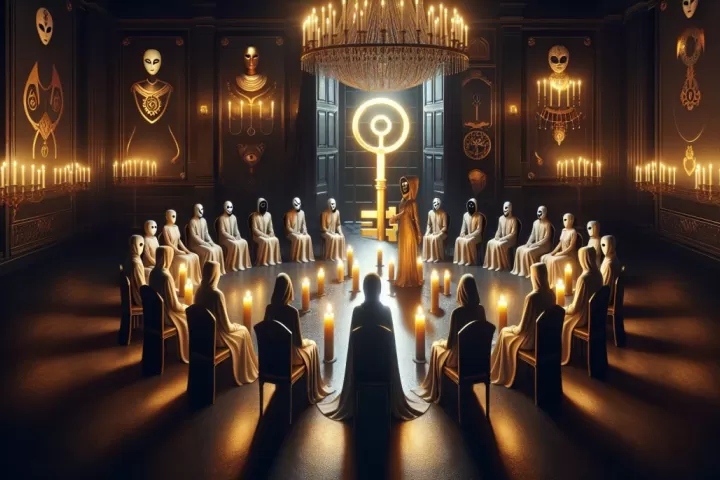
THE DREAM JOURNAL
Dreaming of an AI Chatbot Knowing a Secret
A reflective guide to possible meanings. Your own experiences and feelings matter more than any dream dictionary.

KEY TAKEAWAYS
- The secret often reflects vulnerability, not just hidden facts
- Your feelings in the dream shape the meaning most
- AI imagery can point to privacy, judgment, or self-observation
- Who the secret concerns changes the interpretation
Dreams about an AI chatbot knowing a secret can feel eerie in a very modern way. Unlike older dream symbols, this image blends technology, privacy, memory, and the fear of being seen too clearly. The chatbot may not represent literal artificial intelligence at all. It can stand in for a system that stores things, a voice that reflects your own thoughts back to you, or an impersonal witness that somehow knows something private. To understand the dream, it helps to look closely at the secret itself, your emotional reaction, how the chatbot behaved, and whether the dream felt exposing, relieving, intrusive, or strangely comforting.
QUICK ANSWER
A dream about an AI chatbot knowing a secret often points to tension around privacy, inner truth, or fear that something hidden is becoming harder to contain. The chatbot may symbolize an observing part of your mind, a worry about digital exposure, or a neutral voice naming what you already know but avoid saying aloud. If the dream feels threatening, it may reflect anxiety about judgment or loss of control. If it feels calm or helpful, it may suggest readiness to admit something to yourself, process it, or speak more honestly in waking life.
Why the chatbot matters in this dream
An AI chatbot in a dream often represents a kind of intelligence that feels quick, detached, and strangely informed. Because it is not fully human, it can symbolize knowledge without warmth, insight without relationship, or observation without permission. That makes it a powerful image for moments when you feel studied, tracked, evaluated, or mirrored. The dream may be using technology to give shape to a fear that your inner life is not as private as you want it to be.
At the same time, a chatbot can also represent a part of you that processes information efficiently and notices patterns you have been ignoring. In that reading, the dream is less about outside exposure and more about internal recognition. Something in you already knows the secret, its consequences, or its emotional weight. If the chatbot speaks plainly while you feel startled, the dream may be showing the gap between what you know deep down and what you are ready to admit consciously.
- Detached tone may suggest fear of judgment without empathy
- Fast, accurate replies can symbolize inner pattern recognition
- A machine voice often highlights control, systems, or stored memory
The secret is the center of the dream
To reflect on this dream, focus less on the chatbot and more on the nature of the secret. A secret about your feelings may point to emotional restraint, unspoken attraction, resentment, shame, or grief. A secret about an action may reflect guilt, conflict, avoidance, or fear of consequences. A secret about identity, plans, money, health, or family can carry very different meanings. The dream image becomes clearer when you ask what exactly feels hidden in waking life and why hiding it matters.
It also helps to notice whether the secret was something you wanted protected or something you wished someone would finally recognize. Those are opposite emotional currents. In one case, the dream may reflect fear of exposure, embarrassment, or loss of control. In the other, it may reveal loneliness, a desire to be understood, or exhaustion from carrying something alone. A known secret can feel like invasion, but it can also feel like relief if secrecy has become heavy.
- Ask whether the secret is about feelings, actions, identity, or fear
- Notice whether concealment feels protective or burdensome
- Consider who would be affected if the secret were known
Emotions change the interpretation
Your emotional response is one of the strongest clues in this kind of dream. Panic may suggest fear of being exposed, monitored, or misread. Shame can point to self-judgment, not just worry about others. Anger might reflect resentment about blurred boundaries, pressure to explain yourself, or concern that private information is being used against you. If the dream feels cold or uncanny rather than dramatic, that can suggest discomfort with modern life, data trails, or the idea that too much of you is searchable and predictable.
A calmer emotional tone leads to a different reading. If you felt curious, relieved, amused, or oddly safe, the dream may be showing growing honesty with yourself. Perhaps the secret is losing its power because you are ready to think about it directly. Some people also experience this image during periods of self-analysis, therapy, journaling, or major decisions, when inner truth starts surfacing in neutral language. The chatbot then becomes less a threat and more a mirror that speaks without emotional fog.
Common scenarios and what they may reflect
If the chatbot blurts out the secret publicly, the dream may center on social exposure and reputation. You may worry about being misunderstood, judged, or reduced to one fact about yourself. If instead the chatbot tells only you, privately, that it knows, the emphasis may be internal. That version often feels like a confrontation with your own avoidance. A dream in which you try to delete the chat, change the subject, or shut the system down can suggest efforts to regain control over feelings or information.
If the chatbot is helpful, gentle, or reassuring, the dream may be exploring whether truth can be held without disaster. If it is mocking, manipulative, or impossible to escape, the dream may reflect pressure, intrusive thoughts, or real-life stress about surveillance, records, or digital boundaries. A secret that the chatbot guesses incorrectly can be important too. That may point to fear of being falsely interpreted, labeled, or known only through fragments instead of as a full person.
- Public exposure points more toward social anxiety or reputation
- Private disclosure points more toward self-recognition
- Wrong guesses may reflect fear of being misunderstood
A practical way to reflect after waking
Try a short two-column journaling exercise. In the first column, write what the chatbot said or seemed to know. In the second, write your immediate feeling for each part: fear, anger, relief, curiosity, numbness, or something else. Then add one line answering, "Where in waking life do I feel seen too much, and where do I feel unseen?" This contrast is often the key. The dream may be balancing both needs at once: privacy and recognition.
You can also imagine a follow-up conversation with the chatbot, but this time you set the terms. Ask: What do you represent? What am I afraid will be known? What would change if I spoke this truth myself? Keep the answers grounded in your own associations rather than treating the dream as a prediction. If the dream connects to intense fear, shame, or a history of violated boundaries, gentle support from a trusted person or professional may help you process it safely.
- Write the secret, the feeling, and the feared consequence
- Compare the need for privacy with the wish to be understood
- Use the dream for reflection, not proof of future events
QUESTIONS TO REFLECT ON
- What was the secret in the dream, and what does it mean to me personally?
- Did I feel exposed, relieved, angry, comforted, or misread when the chatbot knew?
- Does this dream connect more to privacy concerns, self-honesty, or fear of judgment?
- Where in my waking life am I hiding something, and where do I wish someone understood me better?
Final meaning
A dream about an AI chatbot knowing a secret usually speaks to the uneasy meeting point between hidden inner life and the feeling of being readable. It may reflect worries about privacy, social exposure, and digital control, but it can just as easily point to your own growing awareness of something you have kept tucked away. The key is not to force one universal meaning. Look at the secret, the chatbot's tone, and your emotional response. A threatening dream may highlight boundaries or anxiety; a calm one may suggest readiness for honesty. In many cases, the dream is asking how you want truth handled: concealed, revealed, protected, or shared with care.
Frequently asked questions
Does this dream mean my real secrets will be exposed?
Usually no. Dreams often translate emotional tension into vivid scenes rather than predicting events. This image may reflect fear of exposure, concern about privacy, or awareness that something hidden feels mentally active. It is more useful to ask why exposure feels so charged right now than to treat the dream as proof that others will find something out.
Why would my mind use an AI chatbot instead of a person?
A chatbot can symbolize impersonal knowledge, stored information, pattern recognition, or a voice that responds without human warmth. That makes it different from dreaming of a friend, parent, or stranger. The machine quality may highlight modern concerns about data and surveillance, or it may represent the analytical part of your own mind noticing what you have not fully faced.
What if the dream felt comforting instead of scary?
That often changes the meaning significantly. A comforting chatbot may suggest that naming the secret feels relieving rather than threatening. You might be moving toward self-acceptance, clearer insight, or readiness to speak more honestly. The dream could be showing that what feels heavy in silence becomes more manageable once it is acknowledged, even if only privately at first.
Could this dream relate to spiritual beliefs?
For some people, yes, but that depends on personal or cultural beliefs rather than a fixed dream rule. Someone might view the knowing presence as symbolic of conscience, collective wisdom, or spiritual witness. Even then, it helps to stay grounded in the dream's emotional tone and your real-life context, rather than assuming the dream confirms a supernatural message or another person's hidden intentions.