THE DREAM JOURNAL
Dreaming of an Electric Car Driving Alone
A reflective guide to possible meanings. Your own experiences and feelings matter more than any dream dictionary.
KEY TAKEAWAYS
- The dream often centers on control, trust, and direction
- Electric cars can suggest efficiency, values, or modern change
- Your emotions in the dream shape the meaning more than the image alone
- Who was missing from the driver’s seat matters
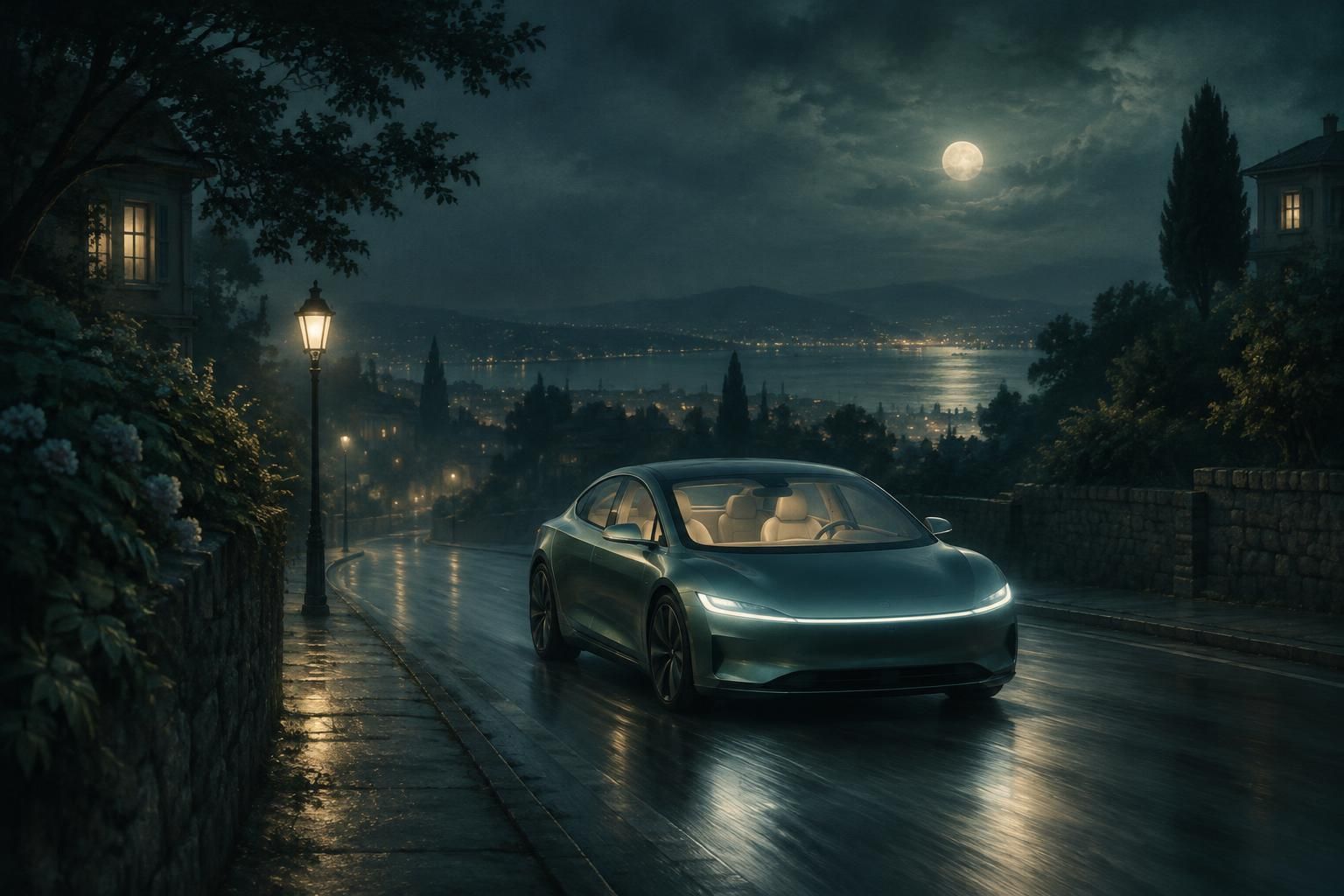
Dreaming of an electric car driving without you can feel eerie, impressive, freeing, or strangely ordinary. The image combines movement, direction, and a machine that seems to keep going without your hands on it. That often mirrors a part of life that feels self-running, hard to influence, or ready to continue with less effort from you. The meaning depends less on any fixed symbol and more on context: where the car was going, whether you were inside or outside it, and what you felt as it moved.
QUICK ANSWER
An electric car driving without you often points to questions about control, independence, and momentum. It may reflect a job, relationship, plan, or habit that seems to be moving on its own. If the dream felt calm, it can suggest trust, delegation, or easing pressure on yourself. If it felt stressful, it may reflect worry about being left behind, replaced, or uncertain where things are headed. The electric detail can add themes of efficiency, personal values, unfamiliar systems, or adapting to change.
Why a driverless car image feels so powerful
Vehicles in dreams often connect with movement, pace, and the direction your life seems to be taking. When no one is driving, the usual link between choice and progress gets interrupted. You may be watching something important continue without your direct control. That can mirror a situation already in motion: a decision that has been made, a routine that now runs automatically, or a change you cannot easily pause.
The image also raises a personal question about your role. Watching the car leave can feel very different from sitting inside it while it moves. In one version, you may feel separated from your own momentum. In the other, you may be involved but not steering. The dream often highlights a tension between agency and observation: are you being excluded, or are you learning that not everything requires constant management?
- Watching it leave can suggest distance from a plan or role
- Riding inside it can suggest trust, passivity, or uncertainty
- Trying to stop it may reflect urgency about regaining influence
What the electric car may symbolize for you
The electric detail adds texture. For some people, electric cars bring up progress, sustainability, efficiency, and living by certain values. For others, they suggest software, battery limits, silence, dependence on charging, or pressure to keep up with changing technology. Those personal associations matter more than any standard meaning. Ask yourself what an electric car represents in your waking life: relief, pride, status, skepticism, inconvenience, or future-minded change.
Because an electric car runs differently from a traditional one, the dream may also reflect a newer way of moving through life. Maybe you are relying more on systems, planning, automation, or invisible support than you used to. A loud gas car might feel impulsive or forceful, while an electric car gliding away can feel cooler, quieter, and more uncanny. That difference can point to subtle change rather than dramatic conflict.
- It may connect to values, efficiency, or modern pressure
- Its silence can make the dream feel detached or uncanny
- Your waking-life opinions about electric cars are key clues
How emotions change the reading
Your feelings in the dream are one of the best guides. Relief can suggest healthy release, such as letting a project run, allowing another person more freedom, or discovering that not every outcome depends on your vigilance. Curiosity can point to adjustment. You may be entering a phase where life feels less manual, and part of you is learning to observe rather than constantly direct.
More difficult emotions change the picture. Panic, anger, helplessness, or shame may highlight fears of losing influence, being replaced, or falling behind a shift you did not fully choose. If you were chasing the car, the dream may echo a fear of missing your moment or losing contact with an older identity. Instead of asking only what the car means, ask what your feelings resemble in waking life right now.
- Relief may point to letting go or delegation
- Curiosity may suggest adaptation to a new phase
- Panic may reflect fear of exclusion, passivity, or lost control
Common scenarios and useful distinctions
Small details can change the meaning a lot. If the empty car rolled away slowly from your driveway, the dream may relate to home life, routine, or familiar responsibilities. If it sped down a highway, the feeling may connect to bigger transitions and pressure to keep up. A smooth, safe trip suggests that momentum has structure behind it. A swerving or crashing car may reflect worry that something is moving forward without enough wisdom, care, or oversight.
Your position matters too. If you forgot to set the brake, the dream may carry regret or self-criticism. If the car seemed designed to drive itself, the focus may be more about trust in systems, changing roles, or discomfort with reduced control. If someone else should have been there but was missing, consider relationship or teamwork issues. Ask: who was absent, and what does that absence say about expectation, responsibility, or emotional support?
- Slow movement near home can reflect everyday shifts
- Fast movement on open roads can reflect larger transitions
- Safe motion feels different from dangerous motion
- An absent expected driver may point to relationship dynamics
A practical way to reflect on the dream
Try writing the dream under three headings: the car, the movement, and your position. Under the car, list your immediate associations with electric vehicles. Under the movement, describe exactly what happened: gliding away, parking itself, speeding up, stopping, or disappearing. Under your position, note whether you were inside, outside, behind it, or chasing it. Then add the strongest emotion beside each note. This keeps the interpretation personal instead of generic.
To go deeper, ask two journaling questions: What in my life currently has momentum without much input from me? Where do I need more trust, and where do I need to re-engage? The dream does not have to mean total surrender or total loss of control. Often it simply highlights imbalance. A useful response is small and concrete: check in on one neglected area, hand off one burden, or name one fear about change honestly.
- Describe the scene before interpreting it
- Name the strongest feeling without judging it
- Link the dream to one current life situation
- Choose one small action: release, check in, or re-engage
QUESTIONS TO REFLECT ON
- What in my life currently feels like it is moving forward without my direct control?
- Did the driverless car feel helpful, threatening, efficient, cold, impressive, or sad to me?
- What do electric cars personally represent to me: progress, pressure, ethics, unfamiliarity, or something else?
- Where might I need to trust a process more, and where do I need to take the wheel again?
Final meaning
A dream about an electric car driving without you often speaks to the tension between momentum and control. Something may already be underway in your life, and the dream shows your relationship to that movement rather than delivering a fixed message. The electric detail can add ideas about modern systems, efficiency, values, and adjusting to unfamiliar ways of operating. Focus on your emotional response and the dream’s practical details. If the scene felt calm, it may reflect trust, delegation, or growth beyond old habits. If it felt disturbing, it may be asking you to notice where you feel disconnected, overly passive, or uneasy about the direction things are taking.
Frequently asked questions
Does this dream always mean I am losing control?
No. It can point to loss of control, but it can also reflect trust, delegation, or a process that no longer needs constant supervision. The emotional tone matters most. A calm dream may suggest that something is progressing well without your heavy involvement, while a frightening one may reflect discomfort with how little influence you feel you have.
What if I was inside the car while it drove itself?
That often shifts the theme from being left behind to being involved without steering. You may still be part of a situation, but not fully directing it. Think about whether you felt safe, trapped, curious, or passive. Those feelings can help you tell the difference between healthy trust and uneasy resignation.
Why does the fact that it was electric matter?
Specific details often carry personal meaning. An electric car might connect with your ideas about progress, ethics, efficiency, silence, software, or dependence on systems. For one person it can suggest thoughtful change; for another it can mean pressure to adapt. Your own waking associations are more helpful than any universal symbol list.
Should I treat this dream as a warning?
Usually it is more helpful to treat it as a reflection than a prediction. The dream may be drawing attention to a real feeling that something is moving too automatically, too quickly, or without enough input from you. If that fits your life, use the dream as a prompt to pause, check in, and decide where you want more involvement.