THE DREAM JOURNAL
Dreaming Face ID Won’t Recognise You
A reflective guide to possible meanings. Your own experiences and feelings matter more than any dream dictionary.
KEY TAKEAWAYS
- The dream often centers on access, identity, or being misread
- Your emotion in the dream changes the meaning dramatically
- Recent tech stress can blend with deeper self-image concerns
- Personal associations matter more than fixed symbols
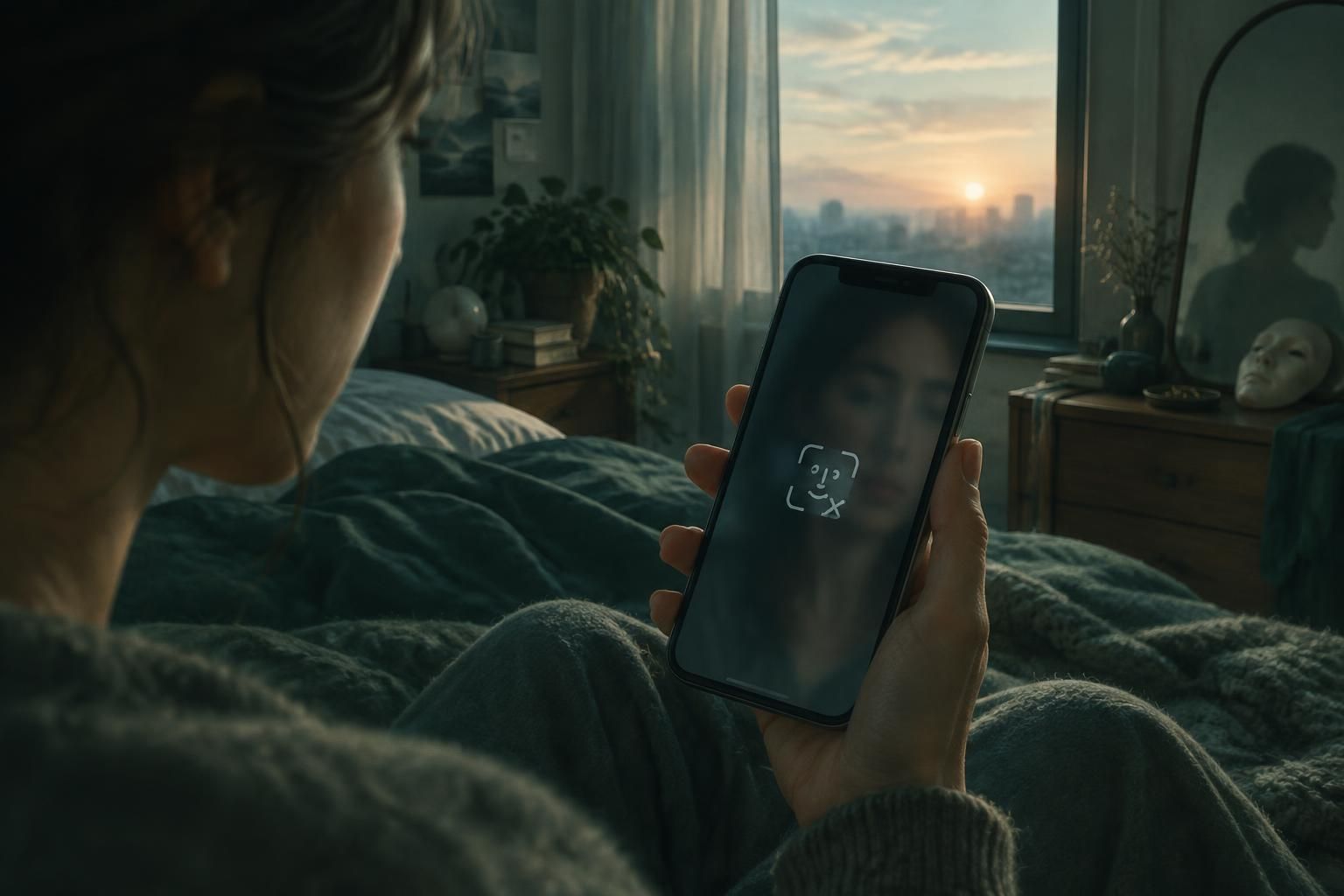
Dreaming that Face ID will not recognise you can feel oddly personal. A device that is supposed to know your face suddenly treats you like a stranger, and that can stir frustration, embarrassment, fear, or even relief. In dream reflection, the image often connects to questions of identity, access, trust, and how accurately you feel seen by others or by yourself. It may also be a simple blend of daily technology stress with deeper emotional themes. Rather than assuming one fixed meaning, it helps to look at the setting, what the phone was blocking, and how you felt when recognition failed.
QUICK ANSWER
A dream about Face ID not recognising you often points to a mismatch between who you are, how you are presenting yourself, and what feels accessible in waking life. You may feel overlooked, doubted, locked out, or changed in ways you have not fully adjusted to. In some cases, the dream reflects practical stress about passwords, privacy, work access, or digital dependence. The clearest reading usually comes from the emotional tone: panic may suggest insecurity or pressure, anger may point to blocked progress, while relief may hint at a wish for privacy or distance from expectations.
Why this dream image hits so directly
Face ID is not just a lock on a screen in a dream. It is a system that says, in effect, I know who you are. When it fails, the dream can spotlight a moment where recognition, belonging, or access feels uncertain. That may relate to a social role, a relationship, a job, or your own self-image. The emotional sting often comes from the idea that something built to identify you now rejects you without explanation.
Because the symbol is so modern, it often carries both practical and emotional meanings at once. You might simply be worried about losing access to important information, money, messages, or routines. At a deeper level, being unrecognised can mirror a fear of not being understood, not being believed, or not fitting the version of yourself that others expect. The dream asks what felt blocked and what recognition would have restored.
- Access denied can symbolize blocked progress or withheld trust
- Recognition failure can reflect feeling unseen or misread
- A personal device can point to private identity, not just public image
Let the emotion change the meaning
The same dream image can mean very different things depending on your feelings. If you felt panicked, the dream may echo pressure about performance, appearance, or being accepted. If you felt ashamed, it may connect to insecurity or the fear that people no longer see you as you really are. If you felt angry, the dream may reflect frustration with obstacles, bureaucracy, or a situation where you have to keep proving yourself.
Relief creates a very different reading. Sometimes the dream is less about rejection and more about wanting privacy, distance, or escape from constant availability. A phone that cannot recognise you may symbolise stepping outside a role, a demand, or an image you are tired of maintaining. Confusion may suggest transition: perhaps you have changed internally, but your habits, environment, or relationships are still responding to an older version of you.
- Panic: fear of exclusion, failure, or losing control
- Anger: blocked access, unfair rules, repeated proving
- Relief: desire for privacy, rest, or freedom from expectations
- Confusion: identity transition or unfamiliar change
Possible waking-life situations behind it
Sometimes the dream is closely tied to recent events. Maybe your phone actually glitched, you were locked out of an account, or you have been dealing with passwords, security checks, work logins, or online verification. In these cases, the dream may use Face ID as a straightforward stress image. Still, even practical dreams can latch onto deeper concerns, especially if access problems happened during a time when you already felt scrutinised, replaceable, or under pressure to present yourself correctly.
Consider contrasting scenarios. If the phone would not unlock while you were trying to call for help, the dream may reflect urgency, vulnerability, or fear of not being supported in time. If it failed while you were trying to hide something, the dream may relate to guilt, secrecy, or fear of exposure. If it happened in front of other people, embarrassment or social judgment may matter most. If you were alone and calm, the issue may be more inward, touching self-recognition rather than public approval.
How to reflect without forcing a fixed meaning
Start by writing the dream in simple order: where you were, what you needed from the phone, how many times you tried, who was present, and what happened next. Then note the strongest feeling in one or two words. This helps you avoid overexplaining too soon. Dreams like this often become clearer when you focus on the blocked action: were you trying to pay, contact someone, prove identity, get home, or open a private space? The blocked task often points to the real-life area under strain.
Try one gentle exercise: stand in front of a mirror for one minute and ask, What part of me feels unrecognised right now? Then journal without editing for five minutes. You might discover that the dream is less about appearance than about a role, effort, boundary, or need that is not being acknowledged. If spiritual meaning matters to you, you may see this as a prompt to reconnect with your authentic self, but that is a personal or cultural lens, not a universal rule.
- Write the dream as a sequence, not a theory
- Name the blocked action before naming the meaning
- Notice whether recognition was needed for safety, status, privacy, or connection
When the dream suggests broader stress
If this dream repeats, it may be worth asking whether you feel chronically misidentified in waking life. That could mean people expect a version of you that no longer fits, or you are working hard to maintain a face that does not feel natural anymore. Repeated dreams of failed recognition can also arise when life feels over-secured, overly monitored, or dependent on systems that leave little room for rest and imperfection. The dream can be a quiet protest against constant verification.
Pay attention if the dream leaves you distressed long after waking, especially if it connects with strong anxiety, isolation, or a painful sense of not knowing yourself. A dream does not diagnose anything, but it can highlight emotional strain that deserves care. Support from a trusted friend, counselor, or mental health professional may help if the theme feels persistent or overwhelming. The goal is not to decode yourself perfectly, but to notice what the dream is asking you to acknowledge more honestly.
QUESTIONS TO REFLECT ON
- What was I trying to access when Face ID failed, and what does that area represent in my waking life?
- Did I feel rejected, exposed, angry, relieved, or numb in the dream?
- Where recently have I felt unseen, misread, or forced to prove who I am?
- Is there a part of my life where I want more privacy or less performance?
Final meaning
A dream where Face ID does not recognise you often revolves around recognition, access, and the tension between your inner sense of self and the systems, roles, or people that respond to you. Sometimes it is a simple replay of technology stress. Sometimes it points to a more emotional truth: feeling misunderstood, blocked, changed, or tired of being measured by a narrow image. The most useful interpretation comes from the details. What was locked, who was watching, and how did you feel? Seen this way, the dream is less a verdict about your identity and more an invitation to notice where you need clearer self-trust, better boundaries, or more honest recognition.
Frequently asked questions
Does this dream mean I have lost my identity?
Not necessarily. More often, it suggests a temporary mismatch between how you feel inside and how you are being recognised in a situation. You may be changing, under pressure, or feeling misunderstood. The dream usually reflects tension around access or recognition rather than a literal loss of self.
What if the dream felt embarrassing because other people saw it happen?
That detail can point to social self-consciousness. You may worry about being judged, not believed, or failing in a visible way. It can also reflect pressure to appear competent, polished, or consistent. Ask yourself where in waking life you feel watched or expected to prove yourself repeatedly.
Could the dream just be about my actual phone or tech stress?
Yes, absolutely. Recent hassles with devices, passwords, security checks, or digital dependence can easily show up in dreams. Even then, notice whether the dream emotion feels bigger than the practical issue. Sometimes everyday tech frustration becomes a convenient image for deeper stress about control, privacy, or being locked out.
What if I felt relieved that Face ID did not recognise me?
Relief suggests the dream may be about wanting distance from demands, surveillance, or a role you are tired of performing. Instead of rejection, the failed recognition may symbolize a small escape. Consider whether you need more privacy, downtime, or permission to stop presenting a version of yourself that feels overly managed.