THE DREAM JOURNAL
Northern Lights Above Your Home Dream Guide
A reflective guide to possible meanings. Your own experiences and feelings matter more than any dream dictionary.
KEY TAKEAWAYS
- Home often points to your inner life, family, or sense of safety
- The lights can suggest awe, change, hope, or emotional intensity
- Your feeling in the dream matters more than any fixed symbol
- Details like weather, color, and who was with you shift the meaning
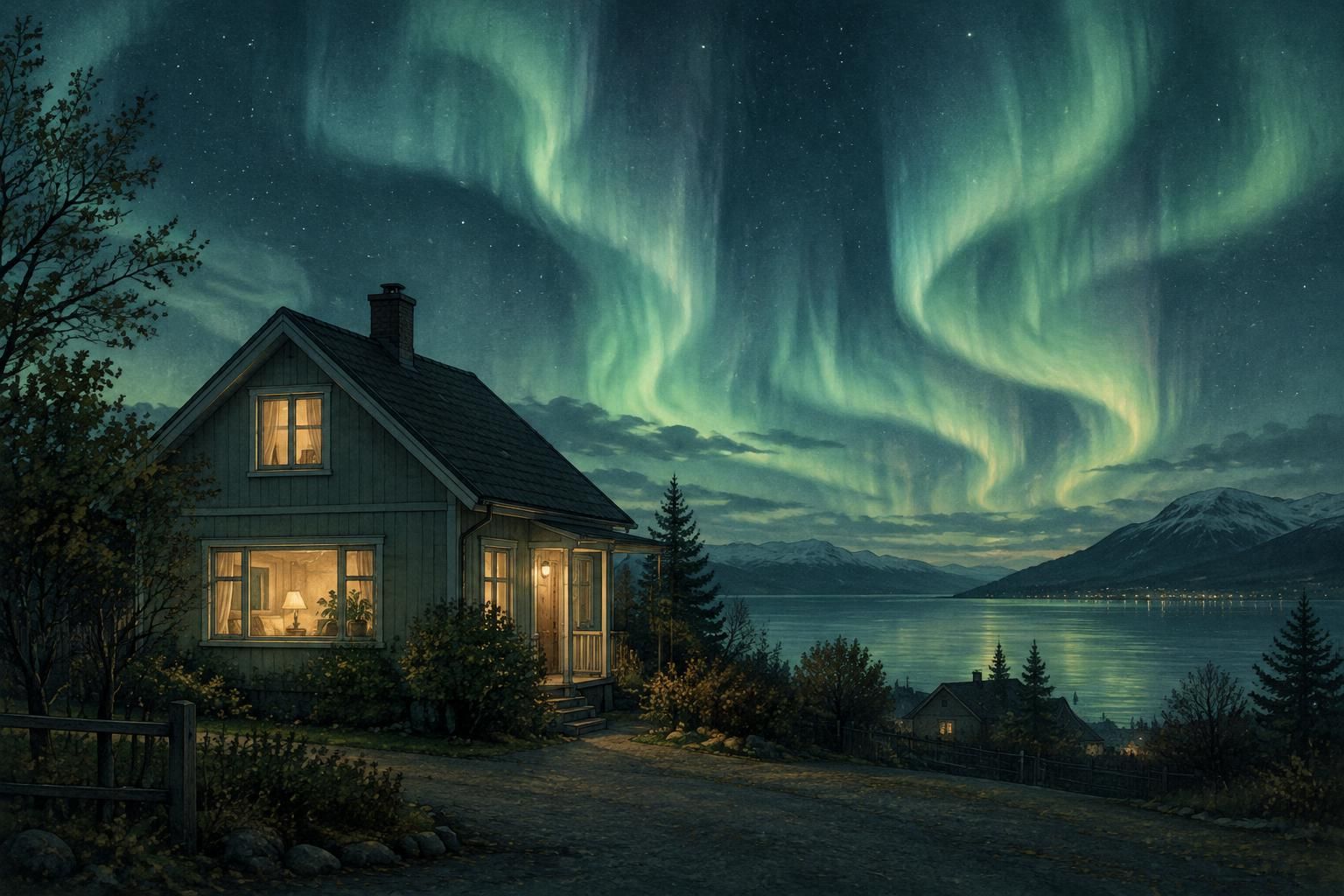
Dreaming of northern lights above your home can feel beautiful, strange, comforting, or unsettling all at once. The image combines two powerful elements: a sky event that feels rare and hard to control, and a home that usually represents familiarity, privacy, roots, or your inner emotional space. Together, they can point to change entering a personal area of life, a new perspective on family or belonging, or a moment when something larger than everyday routine seems to reach you directly. Rather than treating the dream as a fixed sign, it helps to explore the mood, setting, and personal associations that made the scene feel meaningful to you.
QUICK ANSWER
A dream about northern lights above your home often reflects an unusual emotional or spiritual-seeming experience touching your personal life. It may suggest wonder, transition, inspiration, vulnerability, or a sense that something important is happening close to your core sense of self. If the dream felt peaceful, it can point to hope or renewal. If it felt eerie or disruptive, it may reflect uncertainty, instability, or overwhelm around home, family, or identity. The strongest clues come from your emotions, the condition of the house, the colors of the lights, and who was present with you.
Why this dream image feels so personal
Home in dreams often connects to your private self: the part of life tied to safety, history, family patterns, routine, and the way you hold yourself together. Northern lights, by contrast, feel rare, spacious, and beyond human control. When those lights appear directly above your house, the dream may be showing a meeting point between ordinary life and something emotionally larger. That larger force could be inspiration, change, grief, healing, uncertainty, or a growing awareness you can no longer keep at a distance.
This contrast matters. If the dream placed the lights over your childhood home, the focus may lean toward old memories, inherited beliefs, or family identity. If it was your current home, the dream may relate more to your present emotional state, household relationships, or daily pressures. If you did not fully recognize the house, it could point to a changing sense of self. The image does not automatically mean something mystical happened; it may simply give dramatic visual form to a real inner shift that is already underway.
- Childhood home: old emotional patterns or roots
- Current home: present-life concerns and security
- Unfamiliar home: identity changes or uncertainty about belonging
Your emotions are the clearest guide
The same dream image can mean very different things depending on how you felt beneath it. Awe, relief, and gratitude may suggest you are opening to beauty, possibility, or emotional renewal in a part of life that has felt closed off. Fear, confusion, or dread can suggest the opposite: that change is entering your personal space faster than you feel ready for. A dream that begins with admiration but turns uneasy may reflect mixed feelings about growth, intimacy, or unexpected responsibilities at home.
Notice whether you were inside the house, watching through a window, or standing outdoors under the sky. Watching from inside can suggest caution, distance, or the wish to stay protected while something intense unfolds. Going outside may reflect readiness to engage with change more directly. If you were calling others to come look, the dream could involve a need to share a meaningful realization. If nobody else seemed interested, you may be feeling alone in an experience that matters deeply to you.
- Peaceful mood: hope, trust, openness
- Uneasy mood: vulnerability, instability, overwhelm
- Shared experience: desire for connection or recognition
- Solitary experience: private awakening or isolation
Small details can shift the meaning
Color, movement, and weather all add nuance. Soft green or flowing pastel lights may feel soothing and reflective, while vivid red, harsh flashes, or chaotic motion can feel urgent, emotionally charged, or destabilizing. A clear sky may suggest clarity or revelation. Clouds, storms, or damaged parts of the home may indicate that insight is arriving in the middle of confusion. If the lights seemed to touch the roof, enter the house, or change the rooms inside, the dream may point to a shift that feels deeply personal rather than merely observed.
Think in contrasts rather than fixed codes. Northern lights above a warm, intact home while loved ones gather outside could reflect shared hope, celebration, or a family transition that feels meaningful. The same lights above a dark, empty, or unsafe house may reflect loneliness, estrangement, or the sense that something powerful is stirring where support is thin. If you were filming the lights instead of experiencing them, the dream may ask whether you are documenting life from a distance instead of fully feeling it.
- Clear sky versus stormy sky
- Warm home versus damaged or empty home
- Watching directly versus recording on a phone
- Lights far away versus pressing close overhead
Personal beliefs and associations matter most
Some people connect northern lights with wonder, travel, mystery, or a once-in-a-lifetime event. Others associate them with cold climates, isolation, science, beauty, or stories told in childhood. In some spiritual or cultural frameworks, unusual sky phenomena may be seen as meaningful signs, but those interpretations depend on personal and community beliefs rather than universal dream laws. It is more useful to ask what the lights mean to you than to force the dream into a ready-made symbol that does not fit your life.
The home element also carries individual meaning. For one person, home means comfort and family closeness. For another, it means pressure, surveillance, duty, or unresolved pain. Because of that, northern lights above your home might feel like blessing, interruption, exposure, invitation, or emotional contrast. If the dream brought up strong distress, especially around family conflict or safety, reflection can help, but support from a trusted person or professional may also be appropriate. You do not have to decode everything alone.
A gentle exercise for reflection and action
Try a short two-column journal exercise. In the first column, list the concrete dream details: which home it was, the colors, weather, who was there, where you stood, and the strongest feeling in your body. In the second, write what each detail resembles in waking life right now. For example, a silent sky might connect to calm after conflict, while a brilliant moving sky might resemble a fast emotional shift, a new relationship, creative energy, or fear of the unknown entering a familiar routine.
Then finish with one practical sentence: Right now, what needs care in my inner home? Keep the answer small and actionable. It might be resting more, having an honest conversation, making your space feel safer, or allowing yourself to enjoy a hopeful change without immediately distrusting it. The goal is not to force a grand meaning but to turn a vivid image into grounded insight. If you like, sketch the house and lights afterward; drawing can reveal emotional emphasis you did not notice in words.
- Write the dream facts first, before interpreting
- Match each image with a current life parallel
- Choose one small caring action for the next day
QUESTIONS TO REFLECT ON
- What did my home in the dream feel like to me: safe, tense, empty, familiar, or changed?
- What emotion was strongest while I watched the lights, and where do I feel that same emotion in waking life?
- Did the lights feel welcome, intrusive, distant, or inviting, and what current situation feels similar?
- Who was with me in the dream, and what does their presence or absence say about support, sharing, or loneliness?
Final meaning
A dream of northern lights above your home often points to something unusual stirring in a deeply personal part of your life. It can reflect beauty arriving where you least expected it, change touching your sense of safety, or emotions too large to stay hidden in the background. The image becomes clearer when you focus on the condition of the home, your location in relation to it, the color and movement of the lights, and your emotional response. Rather than asking what the dream universally predicts, ask what it highlights in you right now. Its meaning may be less about certainty and more about noticing where awe, vulnerability, hope, or upheaval are meeting your private world.
Frequently asked questions
Does this dream mean a big life change is coming?
Not necessarily. Dreams often reflect the emotional atmosphere you are already living in rather than predicting events. Northern lights above your home can symbolize change, but they may also reflect growing awareness, inspiration, or mixed feelings about something already unfolding in your personal life. Look for present tensions or hopes before assuming a future message.
What if the dream felt beautiful but also scary?
That mix is important. It can suggest that part of you welcomes change, closeness, or emotional depth, while another part feels exposed or uncertain. Many meaningful transitions carry both excitement and fear. Instead of choosing one feeling as the true one, explore how both responses may mirror your waking life right now.
Is there a spiritual meaning to northern lights in dreams?
For some people, yes, but that depends on personal or cultural belief. You may experience the dream as spiritually meaningful, especially if it left a strong sense of connection, reverence, or mystery. Still, it is wise to hold that gently and also consider emotional, relational, and practical meanings rather than treating one interpretation as universal proof.
What if the house in the dream was my childhood home?
That often shifts the focus toward earlier experiences, family conditioning, and long-standing emotional patterns. The dream may be revisiting how you learned safety, wonder, fear, or belonging. Ask whether something in your current life is activating an old feeling, especially if the dream atmosphere felt familiar in a way that went beyond the visual setting.