THE DREAM JOURNAL
Dream of the Moon Meaning: Intuition, Cycles, and Emotional Illumination
A reflective guide to possible meanings. Your own experiences and feelings matter more than any dream dictionary.
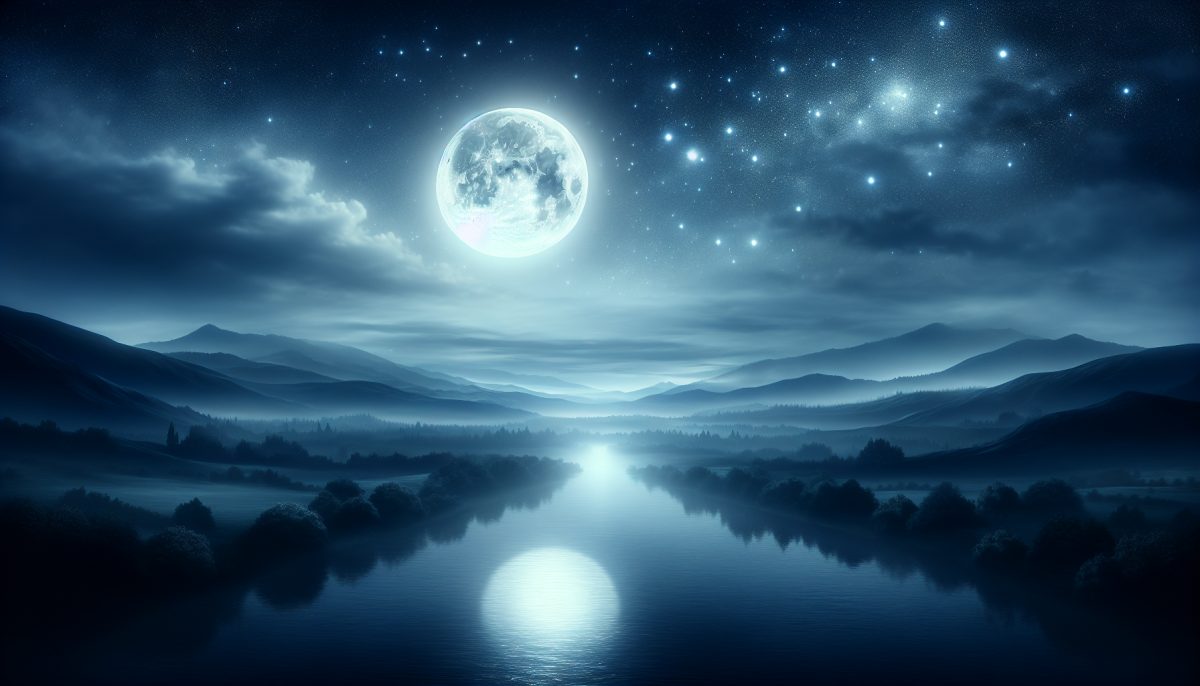
- Dreams about the moon often symbolise intuition, emotion, hidden feeling, inner cycles, and the parts of life that unfold in phases rather than all at once.
- A bright, calm moon may suggest clarity, guidance, and emotional awareness, while a dim, strange, or disturbing moon may reflect uncertainty or inner turbulence.
- Moon dreams are frequently connected with change, feminine symbolism, subconscious material, and the rhythm of personal growth.
- The exact phase or appearance matters because a full moon, crescent moon, eclipse, or unusual moon can each shift the interpretation.
- These dreams usually do not predict the future literally, but they can offer insight into your emotional landscape and the timing of personal change.
A dream about the moon often feels quiet, symbolic, and emotionally deep. The moon has long been linked with intuition, mystery, cycles, hidden feeling, and the subconscious. In dreams, it can act like a soft light shining on what you sense but have not fully named yet.
The moon in dreams usually symbolises intuition, emotional reflection, inner cycles, subconscious awareness, and change unfolding over time. Depending on how the moon appears, the dream may point to clarity and guidance, or to uncertainty, mystery, and feelings that are still forming beneath the surface.
Core Meaning of the Moon in Dreams
The moon is one of the clearest dream symbols for emotion, instinct, mystery, and inner rhythm. Unlike the sun, which often feels direct and outward, the moon tends to reflect what is subtle, indirect, and unfolding. That is why moon dreams often appear during emotionally meaningful periods, transitions, and moments when you feel drawn inward.
Because the moon changes in phases, it also symbolises timing. A moon dream may be less about instant answers and more about recognising what stage of a process you are currently in: beginning, building, release, or completion.
Emotional Reflection
The moon often mirrors feeling, mood, and the need for deeper emotional clarity.
Cycles and Change
Its phases make it a strong symbol for transitions, timing, endings, and new beginnings.
Subconscious Awareness
Moon dreams often point to what is half-seen, intuitive, or still rising from beneath awareness.
Guidance in Darkness
A bright moon can symbolise calm direction when life feels uncertain or dim.
Common Moon Dream Scenarios
The appearance of the moon changes the message. These four scenarios are especially common and useful for interpretation.
Seeing a Full Moon
A full moon often suggests emotional illumination, completion, heightened intuition, or something becoming clear at last.
- Clarity
- Completion
- Strong feelings
Seeing a Crescent or New Moon
This can point to beginnings, quiet hope, inner preparation, or a stage where something important is still forming.
- New phase
- Potential
- Subtle movement
An Eclipse or Disturbing Moon
A darkened, red, or unsettling moon may reflect confusion, emotional turbulence, fear of change, or hidden feelings intensifying.
- Uncertainty
- Shadowed emotion
- Inner disruption
A Huge or Unnaturally Close Moon
This often symbolises overwhelming emotion, awe, or the sense that something subconscious is becoming too powerful to ignore.
- Emotional intensity
- Awe and mystery
- Hidden feeling rising
Spiritual Meaning of the Moon
Spiritually, the moon is often associated with intuition, feminine energy, receptivity, mystery, and the sacred rhythm of change. A moon dream may suggest that logic alone is not enough right now and that inner knowing deserves more attention.
If the dream felt peaceful, it may be offering reassurance that your path is revealing itself gradually. If it felt eerie or uncertain, it may be asking you to trust the process of not fully knowing yet while still listening carefully to what your inner world is showing.
This dream may be inviting you to trust your inner rhythm instead of forcing clarity before it is ready to arrive.
Emotional and Psychological Meaning
Psychologically, moon dreams often relate to emotional processing, reflection, and the quiet movement of the subconscious. They can appear when you are trying to understand your feelings, adapt to change, or make sense of something that is not yet fully conscious.
The moon may also symbolise a need for gentler attention. Rather than dramatic confrontation, the dream invites observation. You may not need to force answers right away. You may simply need to notice what is waxing, waning, hidden, or growing brighter inside you.
- Calm wonder may reflect intuitive clarity, acceptance, and emotional openness.
- Fear or unease can point to uncertainty, hidden feelings, or discomfort with what is emerging.
- Sadness or longing may relate to memory, cycles of attachment, or emotional transition.
- Awe often suggests that the subconscious is presenting something meaningful and larger than ordinary thought.
Life Cycles and Personal Context
Moon dreams often make the most sense when you place them beside your current life cycle. Are you starting something, reaching a peak, waiting for clarity, or letting something go? The phase-like quality of the moon often mirrors the emotional stage of your own process.
Personal associations matter too. If the moon feels romantic, mystical, lonely, or comforting to you in waking life, the dream will likely lean in that direction. The symbol is universal, but its emotional flavour is still personal.
Beginnings
A quieter moon may reflect preparation, gestation, and emotional movement that is not yet visible to others.
Completion
A full or brilliant moon may symbolise culmination, recognition, or something emotionally ripening.
Release
A fading or obscured moon can point to endings, surrender, and the need to let a cycle close.
Personal Meaning
The dream becomes clearer when you connect the moon image with your own emotional history and current stage of life.
How to Work with a Moon Dream
Moon dreams usually become clearer when you slow down and treat them as emotional symbols rather than literal predictions.
- Record the moon’s appearance: Was it full, dim, crescent, eclipsed, strange, beautiful, or frightening?
- Notice the feeling: Calm, awe, sadness, romance, and fear each point to different meanings.
- Think in phases: Ask what in your life is beginning, building, peaking, fading, or waiting to be understood.
- Respect intuition: This dream may be less about hard logic and more about quiet inner knowing.
- Avoid over-literal reading: Moon dreams are often symbolic reflections of your emotional state, not direct predictions.
This guide is for general information and reflection only. It is not medical advice or a substitute for professional assessment.
For background, see Sleep Foundation – Dreams and American Psychological Association – Dreams.
Frequently Asked Questions
It often symbolises intuition, emotion, subconscious awareness, inner cycles, and change unfolding over time.
It can symbolise clarity, completion, heightened feeling, or something emotionally coming into view, though the exact meaning depends on the dream tone.
This may point to uncertainty, hidden feelings, emotional turbulence, or discomfort with a change that is still unfolding.
They often feel spiritual because the moon is widely linked with intuition, mystery, feminine symbolism, and inner guidance.
Look at the moon’s phase or appearance, your emotional response, and what life cycle or transition you may currently be moving through.