THE DREAM JOURNAL
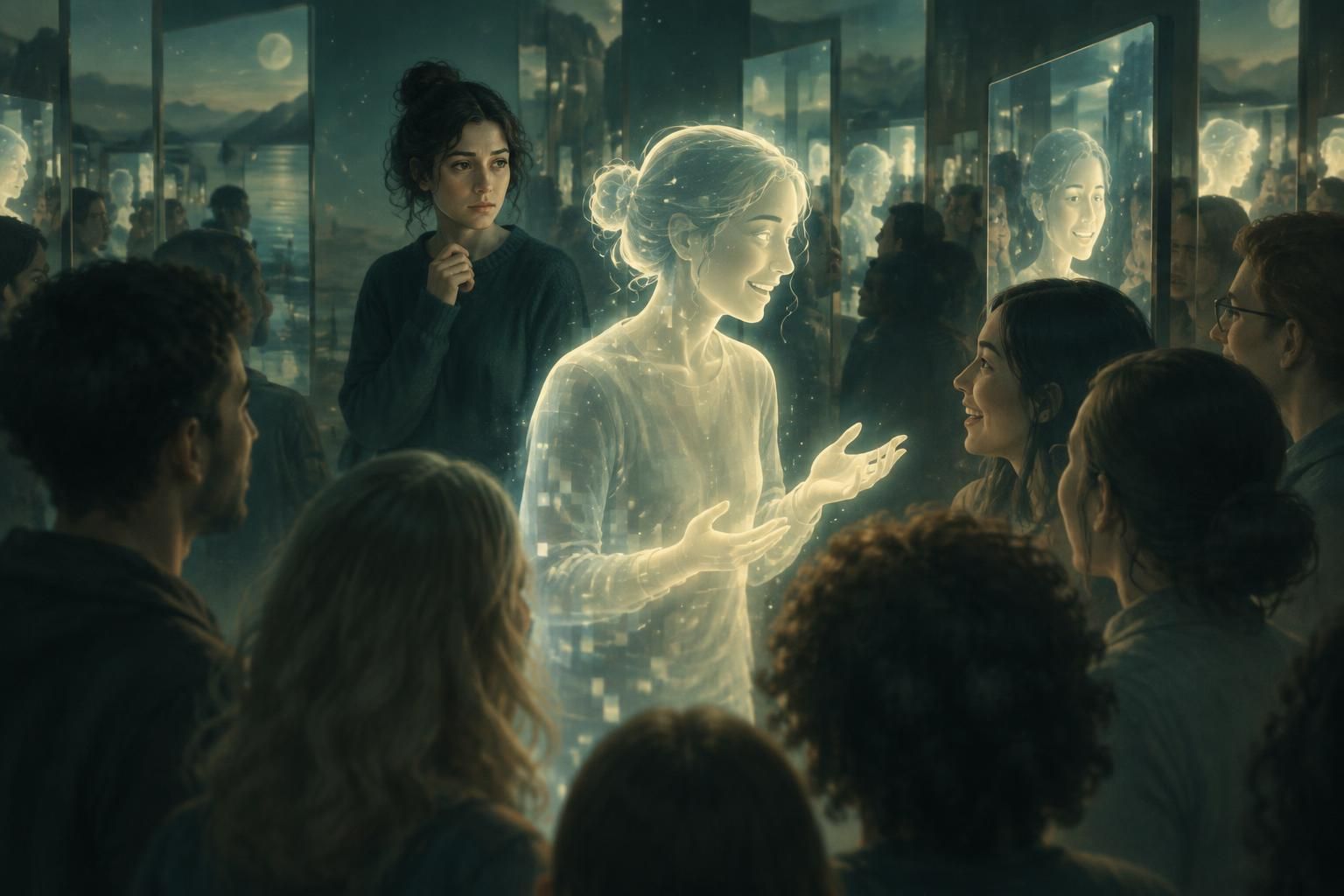
Dreaming Your Digital Avatar Replaces You
A reflective guide to possible meanings. Your own experiences and feelings matter more than any dream dictionary.
KEY TAKEAWAYS
- The dream often centers on identity, control, or visibility
- Your feelings in the dream change the meaning significantly
- A helpful reading compares online roles with private self
- Small details reveal whether the avatar feels freeing or threatening
A dream where your digital avatar replaces you can feel creepy, impressive, or strangely relieving. It often raises a basic question: which version of you is actually being seen and responded to? Because an avatar is edited, designed, and often easier to manage than a full human self, this image can reflect the gap between private experience and public performance. It may relate to online life, work roles, social pressure, or simple exhaustion. The most useful clues are the dream’s emotional tone, who accepted the avatar, and whether being replaced felt like loss, relief, or both.
QUICK ANSWER
This dream usually points to tension between your lived self and the version of you that performs in public. If the avatar seemed smoother, more successful, or more liked, the dream may reflect self-editing, comparison, or pressure to maintain an image. If it felt invasive, the dream may highlight fear of being misunderstood or replaced. If it felt helpful, it may show adaptation or a wish for relief. Focus on your feelings, the avatar’s behavior, and where in waking life you feel most managed or on display.
Identity, image, and being seen
A digital avatar replacing you often highlights the difference between being yourself and being represented. An avatar is usually a simplified version, shaped for approval, protection, or efficiency. If it spoke for you, appeared in your place, or handled your relationships, the dream may be asking whether people are responding to your real experience or to a version built to function smoothly. This can matter in online spaces, but it can also describe work, family, or social roles where you feel expected to be consistent, polished, and easy to read.
That does not automatically mean your public self is false. Most people use different sides of themselves in different settings. The dream is more likely pointing to strain: perhaps one version of you has become so dominant that your fuller self feels sidelined. Notice where the replacement happened. Being replaced at work can suggest performance pressure or disposability. Being replaced among friends may point to fears about belonging, likability, or being known only through a persona. The issue is not whether the avatar is fake, but whether it has become disconnected from your inner life.
- Notice where the replacement happened: work, romance, family, school, or online
- Ask whether the avatar seemed improved, flattened, or strangely emotionless
- Consider who preferred the avatar and what that says about your concerns
What the avatar was doing matters
The avatar’s behavior gives the dream its direction. If it performed better than you, solved problems fast, or said exactly the right thing, the dream may reflect comparison, perfectionism, or pressure to be more productive and appealing. If it copied you badly, confused people, or embarrassed you, the dream may point to fears of being misrepresented. A silent avatar can suggest disconnection or emotional numbness, while an overly expressive one may reflect a part of you that has been exaggerated to win attention, approval, or safety.
Contrast is especially helpful here. An avatar taking over while you watch helplessly feels very different from one that handles draining tasks so you can rest. The first often leans toward loss of control or fear of being replaceable. The second may express burnout and a wish for relief from constant effort. If the avatar ignored your instructions or developed a life of its own, the dream may be showing a persona that once protected you but now feels demanding, limiting, or larger than intended.
- Helpful avatar: relief, experimentation, delegation, adaptability
- Competitive avatar: insecurity, image pressure, fear of replacement
- Distorted avatar: miscommunication, flattening, anxiety about how you come across
Emotions change the reading
Your feelings in the dream are often the clearest guide. Fear can suggest a threat to agency or individuality. Shame may point to discomfort about what others see, or what you hide. Anger can signal resentment that people expect you to be endlessly available, agreeable, or high-functioning. Relief matters just as much. If you felt glad the avatar took over, the dream may be revealing how tired you are of visibility, responsibility, or self-presentation. The image can be less about identity loss and more about emotional overload.
Mixed feelings are especially revealing because they often mirror real life. You might admire the avatar’s confidence but feel hurt that others preferred it. That can reflect a genuine conflict: wanting to grow into a stronger version of yourself without feeling erased. Curiosity, meanwhile, may suggest identity experimentation rather than danger. To ground the meaning, name the strongest feeling and ask where it already lives in waking life. Was the dream amplifying a workplace pressure, a relationship pattern, or a private fear that you are easiest to accept when heavily edited?
- Name the strongest feeling first, before analyzing symbols
- Ask where that feeling already appears in daily life
- Notice whether the dream leaves you defensive, sad, curious, or relieved
Possible waking-life triggers
This dream often appears when identity feels managed or evaluated. Common triggers include heavy online interaction, interviews, dating, creative self-promotion, performance reviews, or joining a new group. It can also arise when systems, schedules, or expectations make you feel interchangeable. Even if technology is not a major stressor, the avatar may give modern form to an older concern: that acceptance depends on editing yourself into something easier, cleaner, or more useful for others.
Personal history also shapes the dream. If you learned early to read the room and become what was needed, the avatar may represent a survival strategy that became automatic. If you are building confidence, it may instead reflect an aspirational self-image. To sort this out, keep the question personal and concrete. Ask: Where am I performing more than participating? Where do I feel flattened into a role? Where would a little more honesty feel safe and relieving? These questions turn the dream into reflection rather than a fixed verdict.
- Recent situations where you felt watched, rated, or compared
- Places where you self-edit more than usual
- Moments when convenience or approval mattered more than authenticity
A gentle exercise for reflection
Try a simple two-column journal entry. In the first column, describe the avatar in specific terms: voice, appearance, confidence, flaws, abilities, and how other people responded to it. In the second, describe your real-self position in the dream: ignored, relieved, jealous, protected, exposed, curious, or angry. The biggest contrast between the two columns often reveals the dream’s theme. Was the avatar carrying traits you miss in yourself, or was it showing the cost of being reduced to a performance?
Then answer three prompts: The avatar can do what I feel I cannot. People responded to the avatar by. The part of me needing attention is. End with one practical step, not a dramatic overhaul. You might choose one low-stakes place to be slightly less edited this week, or one setting where stronger boundaries would help. The goal is not to reject every role. It is to notice when a role serves you, when it protects you, and when it starts replacing your voice.
- Write the dream in present tense to recover details
- Name one trait of the avatar you genuinely value
- Choose one small experiment in more honest self-expression
QUESTIONS TO REFLECT ON
- Where in my life do I feel represented rather than truly known?
- Did the avatar feel like a threat, a helper, or an idealized version of me?
- Who accepted the avatar most easily, and what does that suggest about my current relationships or roles?
- What quality in the avatar might I want to integrate without losing myself?
Final meaning
A dream about your digital avatar replacing you usually reflects a live tension between authenticity and performance. Sometimes it points to fear of being misunderstood, flattened, or made replaceable. Sometimes it reveals exhaustion and a wish for a more efficient version of you to take over. In other cases, it shows a period of experimentation, where you are testing new ways of presenting yourself. The grounded interpretation comes from the feeling in the dream, the avatar’s role, and the area of life it resembled most. Instead of asking whether the avatar is the real you, ask what it is helping you manage, hide, or become.
Frequently asked questions
Does this dream mean I am losing my identity?
Usually not. More often, it reflects stress around roles, image, or how others perceive you. The dream may be showing that one version of you is getting more attention than the rest. That can feel unsettling, but it is also useful information about where you may need more honesty, rest, or self-definition.
What if the avatar was better than me in every way?
That often points to comparison, perfectionism, or fatigue. The avatar may represent a fantasy of being smoother, more capable, or less vulnerable. Instead of treating it as proof that you are inadequate, ask which qualities stood out most. Those traits may be ones you want to develop realistically, without expecting yourself to become flawless.
What if I felt relieved when the avatar replaced me?
Relief often suggests overload. You may be tired of performing, deciding, explaining, or being visible all the time. The dream can be a sign that one part of your life feels too demanding. Rather than judging yourself, ask what would actually reduce pressure: rest, clearer limits, less self-monitoring, or support from others.
Is this dream about technology or social media specifically?
Sometimes, especially if your days involve profiles, messaging, remote work, or curated self-presentation. But the dream does not have to be about technology itself. Avatar imagery can also express older themes like masks, reputation, imitation, and acceptance. Focus less on the device and more on where you feel turned into a role.