THE DREAM JOURNAL
Dreaming of a QR Code That Won't Scan
A reflective guide to possible meanings. Your own experiences and feelings matter more than any dream dictionary.
KEY TAKEAWAYS
- The dream often centers on access, clarity, trust, or readiness
- Your feelings in the dream strongly shape the meaning
- A failed scan can mirror mixed signals or a path that is not working as presented
- Personal associations matter more than any fixed symbol
Dreaming of a QR code that will not scan often reflects a frustrating gap between wanting access and not being able to get through. Because QR codes are designed to connect you quickly to information, entry, payment, or instructions, a failed scan can mirror a waking-life situation that looks simple on the surface but feels confusing in practice. The dream may point to blocked communication, pressure to move fast, mistrust of a system, or uncertainty about what comes next. Its meaning usually becomes clearer when you focus on what the code was supposed to open and how you felt while trying.
QUICK ANSWER
A QR code that will not scan in a dream often suggests difficulty accessing clarity, reassurance, permission, or next steps. It can reflect confusion, poor timing, mixed messages, or the feeling that something presented as easy is not actually working for you. Start with the basics: what was the code meant to unlock, what kept interfering, and what emotion stood out most? Annoyance may fit everyday friction, embarrassment may point to social pressure, and calm suspicion may suggest you are questioning whether a promise or invitation deserves your trust.
Blocked access and the promise of an easy answer
A QR code usually represents convenience. You point your phone, and the next step appears instantly. In a dream, that built-in promise matters. If the code will not scan, your mind may be highlighting a part of life where you expected a smooth process but ran into resistance instead. This can relate to work tasks, paperwork, travel plans, dating, group dynamics, or a personal decision that seemed straightforward until it became strangely hard to navigate.
The most useful question is what the code was supposed to unlock. A code for entry may connect to belonging, permission, or fear of being left out. A payment code may bring up value, fairness, or practical pressure. A code for instructions might reflect uncertainty about what to do next. If the dream showed repeated attempts, it may echo a waking pattern of trying harder at the same approach even though the real problem may be unclear terms, poor fit, or missing context.
- Entrance or ticket: access, belonging, permission
- Payment or checkout: value, exchange, practical security
- Menu or information page: clarity, options, expectations
- Instructions or link: direction, trust, next steps
Your emotional response is the real decoder
The image alone is not the whole meaning. Your feelings during the dream often matter more than the object itself. Mild irritation may reflect ordinary friction, like dealing with delays, bureaucracy, or technology that wastes your time. Embarrassment can shift the focus toward social pressure, especially if other people were waiting and you felt exposed. Panic may suggest a fear of falling behind, missing out, or failing at a moment when you believe you are supposed to perform smoothly.
A calmer response can point somewhere different. If you felt curious or cautious rather than upset, the dream may reflect healthy hesitation. Some part of you may not want instant access until you understand what you are agreeing to. Suspicion also changes the tone. A code that looked fake, wrong, or unsafe may mirror mixed signals in waking life. In that case, the dream is less about a technical failure and more about discernment, boundaries, and your need to slow down before saying yes.
- Annoyance can reflect daily friction or buildup of stress
- Embarrassment may point to being watched, judged, or rushed
- Panic can suggest urgency or fear of falling behind
- Calm curiosity may show caution, skepticism, or self-protection
Details of the scene can narrow the reading
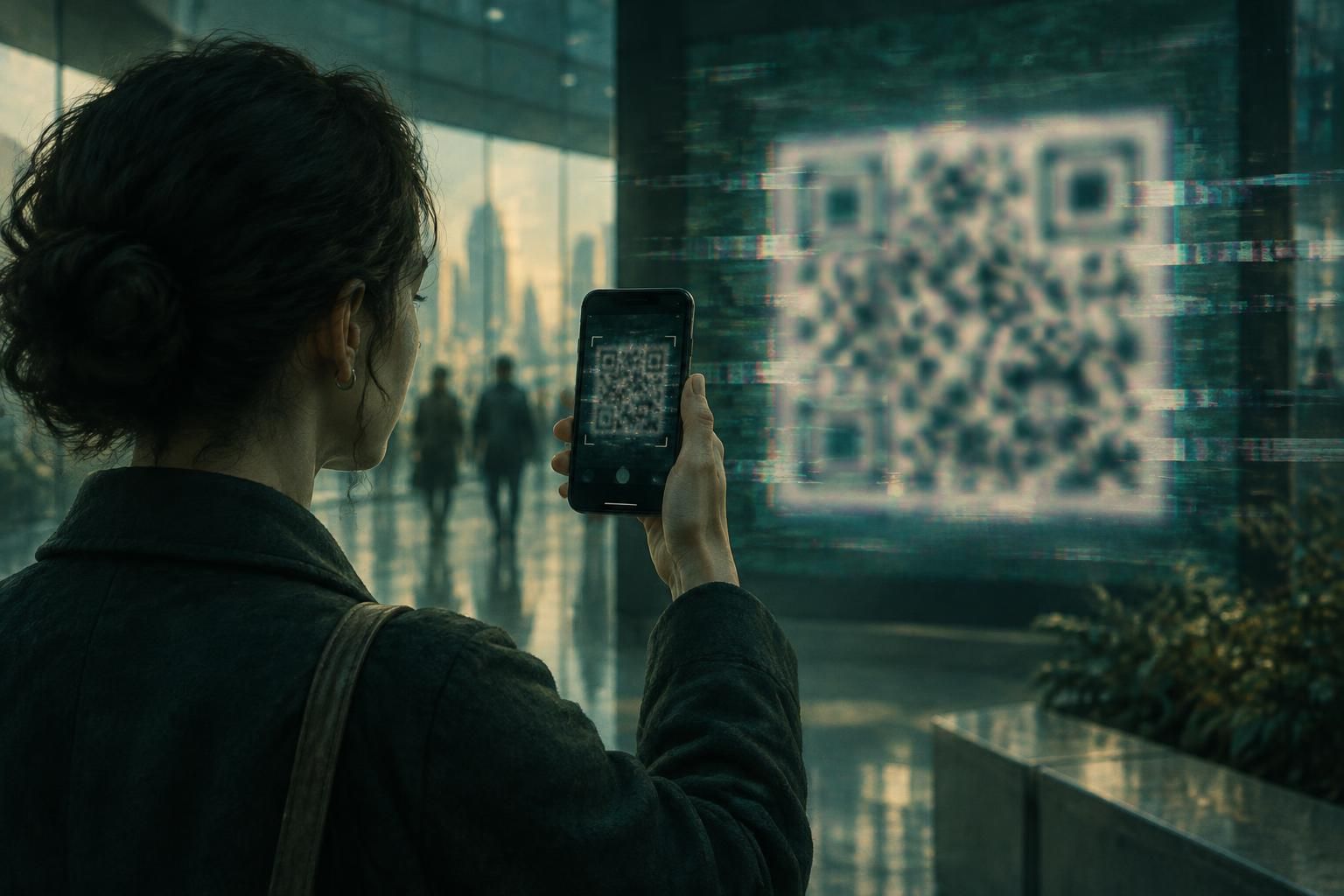
Notice what exactly went wrong. If your phone would not focus, you may be struggling to see a situation clearly. If the screen was cracked, dead, or glitching, the dream could reflect feeling drained, distracted, or unable to rely on your usual tools. If the QR code itself was blurry, damaged, or shifting, the issue may feel less like your failure and more like a message that is inconsistent, poorly presented, or impossible to interpret as given. That distinction matters, especially if you tend to blame yourself first.
The setting can add emotional context. At an airport or station, the dream may connect to timing, transition, or fear of being left behind. At work, it may reflect gatekeeping, procedural pressure, or missing information. In a restaurant or store, the focus may shift toward choice, expectation, and exchange. If the dream happened in public, ask whether being observed made the frustration worse. If you were alone, the meaning may center more on private uncertainty than on performance or reputation.
- Phone problem: trouble focusing, fatigue, limited resources
- Damaged or changing code: unclear message or unstable terms
- Public setting: pressure, visibility, fear of judgment
- Private setting: inner uncertainty, hesitation, personal reflection
A gentle exercise to reflect on the dream
Try writing two short lists. In the first, name what the QR code promised: entry, answers, speed, approval, proof, convenience, connection, or relief. In the second, write what actually happened: delay, error, confusion, exposure, repetition, doubt, or a dead end. Comparing those lists can reveal the waking-life theme. Many people find that the dream mirrors a real situation where the packaging sounds simple but the lived experience feels tangled or unworkable.
Then ask yourself three questions in a journal. What in my life currently feels hard to access? Where am I being asked to move faster than I feel comfortable? If the code had worked, what would have happened next, and how would I honestly feel about that? That last question can be especially revealing. Sometimes the deeper issue is not only the blockage. It is ambivalence about what opening the door would require from you once you got through.
- What was the code meant to open?
- What specifically stopped it from working?
- Who was present, and how did that affect you?
- If it had scanned, what would you have found or agreed to?
Turning the dream into practical insight
This dream can be a useful prompt to simplify one part of your waking life. Ask where you are relying on vague promises, unreadable signals, or a process that looks efficient but leaves you tense. You may need clearer instructions, more direct communication, a slower pace, or permission to stop forcing an approach that is not working. The image of scanning is really about translation. If the pattern will not resolve into something readable, your mind may be telling you that more context is needed before action feels honest or safe.
It may also encourage self-compassion. A failed scan can stir the feeling that you should be able to make something work because everyone else seems to. Dreams like this can reflect the strain of trying to meet that expectation. Rather than treating the dream as a warning or prediction, treat it as feedback. Where do you need clarity instead of speed, and trust instead of pressure? Even one small step, like asking a direct question or pausing before committing, can shift the waking situation that the dream seems to echo.
- Look for places where the process feels clear on paper but not in reality
- Notice whether urgency is making you ignore confusion
- Ask for direct information instead of guessing
- Consider whether the obstacle is external, internal, or both
QUESTIONS TO REFLECT ON
- What was I trying to access in the dream, and what in my life feels similarly out of reach?
- Did I feel annoyed, ashamed, rushed, suspicious, or calm while the code failed to scan?
- Am I dealing with mixed messages, unclear instructions, or a promise that seems simpler than it really is?
- What would clear access look like for me right now, and what conversation or boundary might help create it?
Final meaning
A dream about a QR code that will not scan usually points to a problem of access, interpretation, trust, or readiness rather than one fixed meaning. It may reflect frustration with a stalled process, discomfort with social pressure, confusion about next steps, or wise hesitation around something that does not yet feel readable. The strongest clues are personal: what the code was meant to open, what interfered, and how you felt during the attempt. Instead of reading the dream as a verdict, use it as a mirror. It may be inviting you to ask for clearer information, question a rushed promise, or admit that your next step needs more understanding before it will truly work for you.
Frequently asked questions
Does this dream always mean I'm being blocked from something important?
No. Sometimes it simply reflects everyday frustration with delays, passwords, apps, forms, or unclear instructions. It tends to feel more meaningful when the emotion is strong, the dream repeats, or it closely resembles a current situation where you want progress but keep meeting confusion, pressure, or mixed signals.
What if other people watched me fail to scan it?
That detail often brings social pressure into the dream. The focus may be less about the code itself and more about feeling exposed, judged, slowed down in public, or afraid of seeming unprepared. Think about where in waking life you feel observed or expected to perform smoothly without much room for mistakes.
What if the code looked suspicious or kept changing?
A strange or shifting code can reflect uncertainty about what something is really offering. You may be picking up on unclear terms, mixed messages, or a situation that looks appealing until you examine it closely. The dream can be a prompt to pause, ask better questions, and trust your discomfort when the message does not stay consistent.
Could this dream relate to my own hesitation?
Yes. Sometimes the failed scan mirrors an internal conflict rather than an external obstacle. Part of you may want access, while another part feels unsure about the cost, timing, or meaning of what would open. In that sense, the dream can help you notice ambivalence and make room for a more honest decision.